Showing posts with label SFMTA. Show all posts

Thursday, May 18, 2023

Bike to Wherever Day

Bike to Wherever Day
By

Join people across the city bicycling today for the annual Bike to Wherever Day. The SFMTA is proud to be the official citywide sponsor of Bike to Wherever Day 2023, San Francisco's favorite biking celebration!   

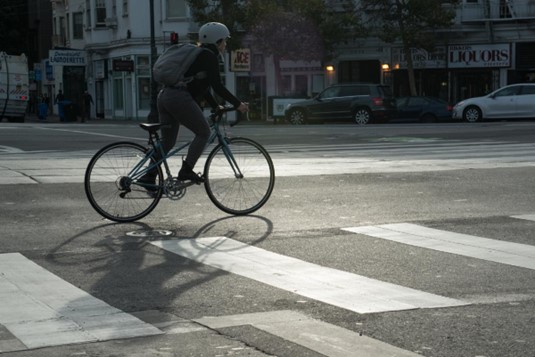
A bicyclist with a backpack and helmet is seen in the street adjacent to a crosswalk.

Hosted by the San Francisco Bicycle Coalition, Bike to Wherever Day celebrates  bicycles as a fun and healthy way to get around. This annual event invites people to pedal to their destinations, and it promotes bicycling both as an alternative commute and as a healthy and safe alternative to driving to…wherever. 

We encourage everyone, including those who don't usually bike, to get out and cycle today. After grabbing some wheels  (your own or a bikeshare bike), consider joining one of the Neighborhood Rides. Need more reason to stop by? You also can pick up your free Bike to Wherever Day canvas tote bag, filled with goodies, courtesy of the SF Bicycle Coalition. 

Resources to Help You Plan Your Bicycle Trip 

The SFMTA has go-to resources to help you plan your bicycle trips.  The interactive bike network map highlights recommended routes and shows bikeshare station locations. Go to our Get Out, Get Going website  to find an interactive multi-mode map with information about other sustainable ways to get around that you could pair with your bicycle trip, including walking and using shared mobility devices, like a scooter or moped.   

The SFMTA supports low-carbon transportation options like bicycles, and we continue to expand our dedicated bike lanes around the city to make streets safer and more comfortable for bicycling.  

You can check out our Slow Streets Program with over 18 corridors  that have traffic limitations so they can be used as shared spaces with walkers and bicyclists. Biking, scooting and rolling  are integral to our new Active Communities Plan, a 2-year process to develop a plan for active mobility in San Francisco.  For more information, visit the project website (SFMTA.com/ActiveCommunities).  


Published May 19, 2023 at 02:50AM
https://ift.tt/8ZskH6A

Wednesday, May 10, 2023

Meet the People of the Next Generation CIS: Leon Yu

Meet the People of the Next Generation CIS: Leon Yu
By Deanna Leo

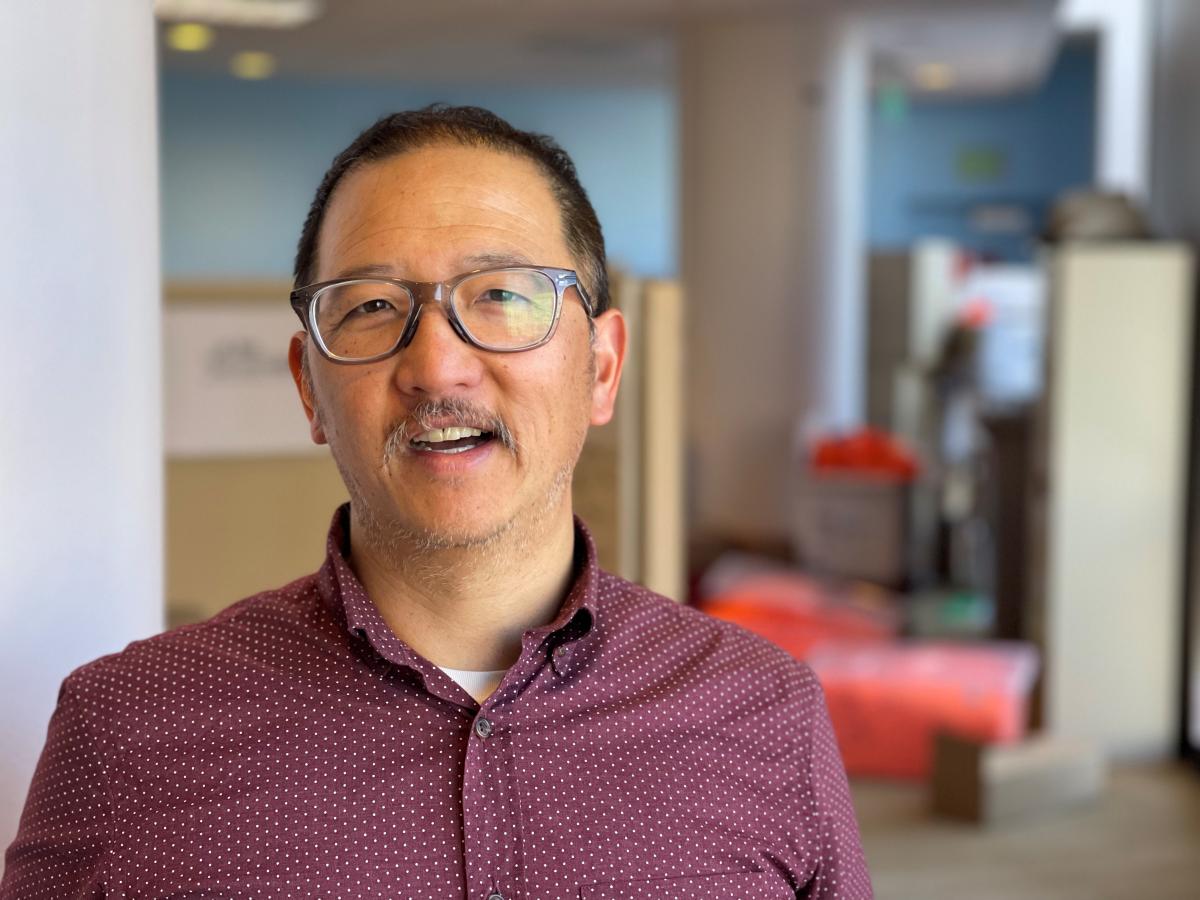
Headshot of SFMTA staff Leon Yu

Leon Yu, Graphic Artist, Creative Services  

What do you do on the project? 

I help design the user experience: What users see on the new displays, how they see it and how often they see it, down to the actual graphics.  

How do you feel your work impacts our customers? Who will benefit? 

My work communicates transit information to customers as cleanly and clearly as possible, so the information is easy for any member of the public to understand. We only have a small space to work with on the displays, so we must make it count. People  of all backgrounds, languages and abilities, so need to get this information quickly at a glance.  

What was your favorite part of the project? 

My favorite part is working with the team and all the different CIS systems. This is such a multidisciplinary project involving many staff and people I’ve never worked with before. Being able to collaborate with so many dedicated colleagues is rewarding.  

What do you like most about working at the SFMTA? 

As a graphic designer, my work is always on display. Being able to see my work in public and see Muni riders engage with my work to get information that helps them with their trip is exciting and satisfying.  

To learn more about this challenging and important project visit the project home page (SFMTA.com/NextGenCIS).   


Published May 11, 2023 at 01:04AM
https://ift.tt/PMgBN53

Thursday, May 4, 2023

Muni Rider Satisfaction the Highest in 10-years!

Muni Rider Satisfaction the Highest in 10-years!
By Bonnie Jean von Krogh

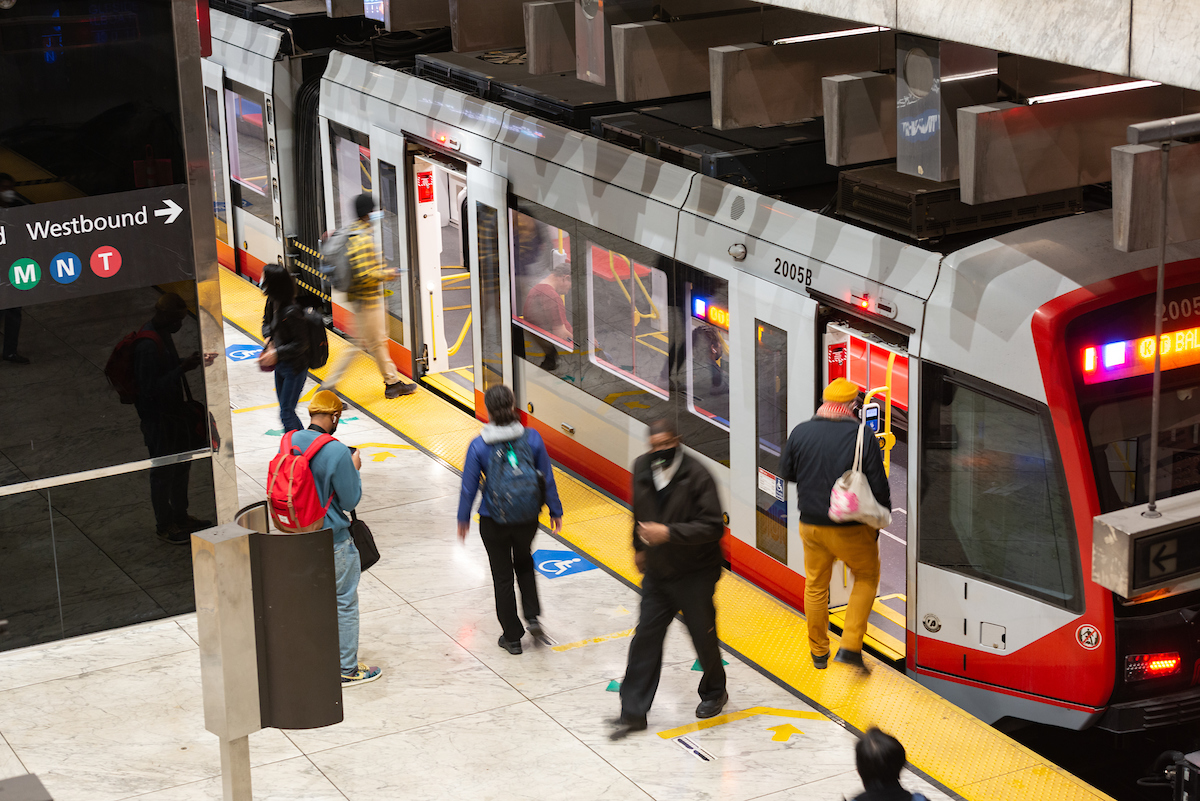
People walking on a station platform. Some are boarding. Some are deboarding.

Here at the SFMTA, we are focused on creating the fastest, safest and most reliable public transportation network for all San Franciscans. This is why we consider it a top priority to hear from our riders and non-riders alike about how we’re doing, what your public transportation priorities are, and ways we can improve. These findings help to inform budget, long-range planning and policy decisions. They also help build a better Muni for everyone traveling in San Francisco. 

In recent months we conducted our Rider Survey as well as a broader Community Survey. Real-time data from our partners at Transit App in their North America Transit Rider Happiness Benchmarking Survey provides additional details about community feedback.  

The good news? Rider satisfaction with Muni services is up across the board: 

  • Per SFMTA’s Rider survey, 66% of Muni riders rate services as good or excellent — a 9% increase from 2021. 
  • The City Survey shows Muni’s rating at its highest level since 2013 
  • Transit App’s survey shows Muni in the Top 5 North American cities when it comes to ranking riders most likely to recommend their public transit system to a friend 
  • Transit App also shows that Muni riders give our drivers the highest overall approval rating across North America. Go, operators! 
  • Finally, the Community Survey showcases that our riders have a much higher approval rating for the SFMTA than non-riders.  

So if you haven’t ridden Muni in a while, maybe it’s time to give it a try.   

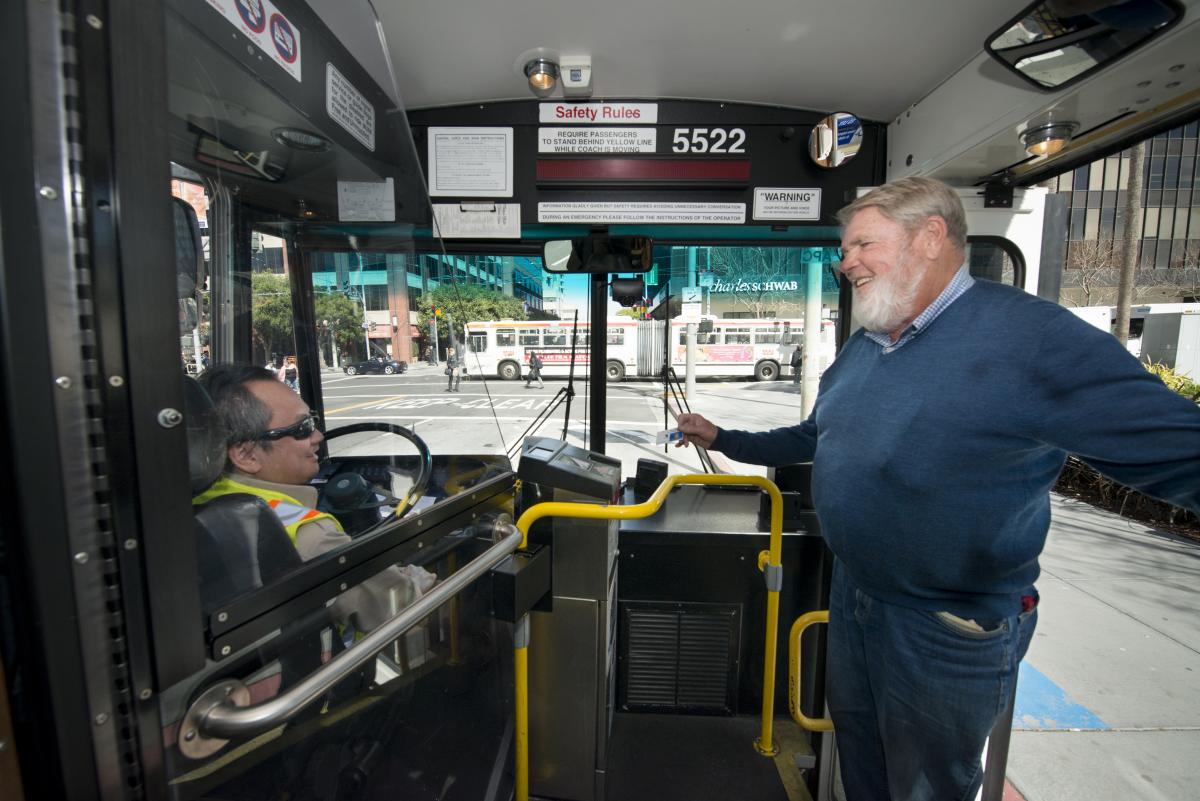
A man with a beard, sweater and jeans is smiling at the front of a bus to an operator who is wearing sunglasses seated in their seat.

 Highlights from the Community Survey

  • 71% of riders approve of the SFMTA compared to  48% of non-riders. 
  • 66% of riders rate Muni service as excellent/good compared to 48% of non-riders.   
  • By 9 points, regular riders also consider Muni safer than non-riders 

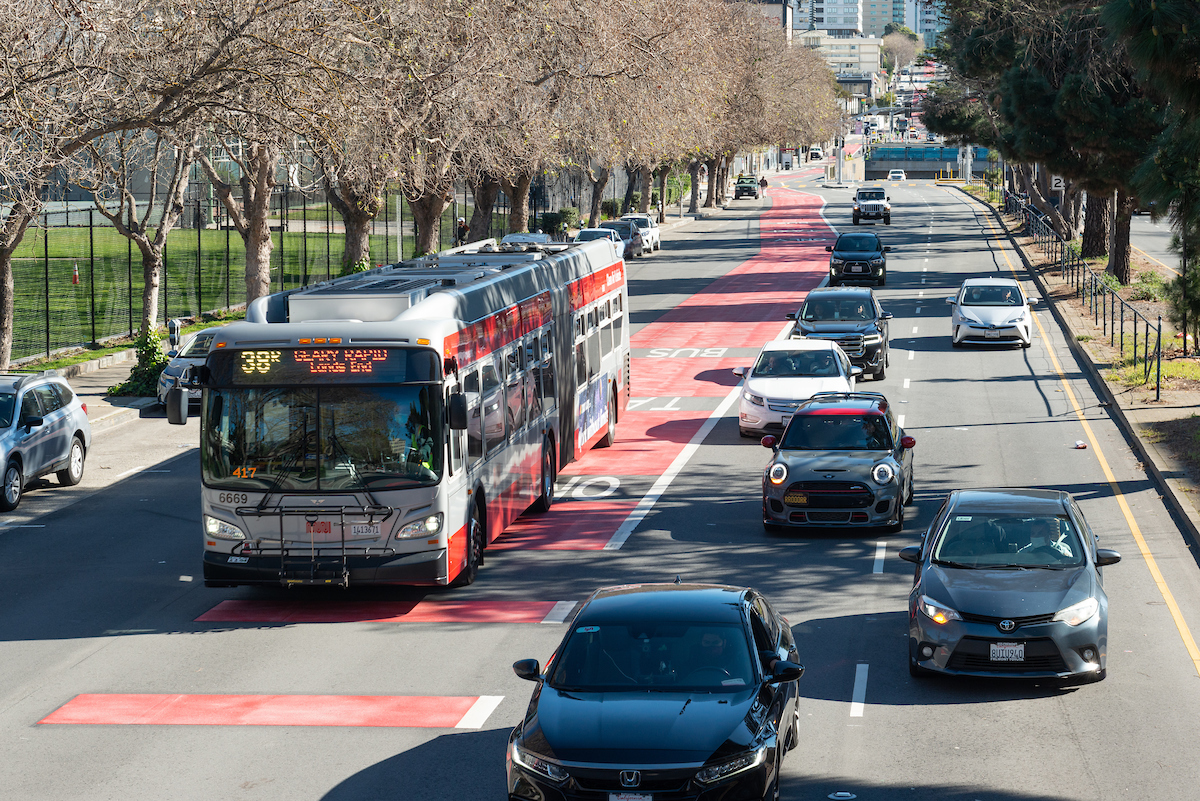
A bus on the left side of the screen is seen on a corridor with over a dozen cars on the right side of the image

Our Rider Survey shows us that customers have noticed the work Muni has been doing to address service delivery since the onset of the pandemic. Our ongoing investments in reliability improvements such as transit lanes, bus bulbs and smart traffic signals have also paid off. Over the last three years, we implemented over 21 miles of new transit lanes, bringing our transit lane network to more than 70 miles! With this expansion, Muni is quicker and more reliable than it has been in decades. 

That said, there’s more to be done, and respondents continue to emphasize “Improving the speed, frequency and reliability of Muni buses and trains,” with two-thirds of respondents prioritizing, “having the most frequent and reliable buses and trains, even if stops are more than 2 or 3 blocks away, rather than having closer stops.”  

Next Steps 

We asked what our community would most like to see changed, and while answers varied, the top priorities according to the Community Survey are:  

  • Crime/safety (including fare evasion and passenger safety) 
  • More reliable/efficient/on time service/less bunching of busses 
  • Better communication and public outreach 
  • Improved cleanliness of transit stops 
  • Additional funding to create faster, safer and more reliable public transportation  

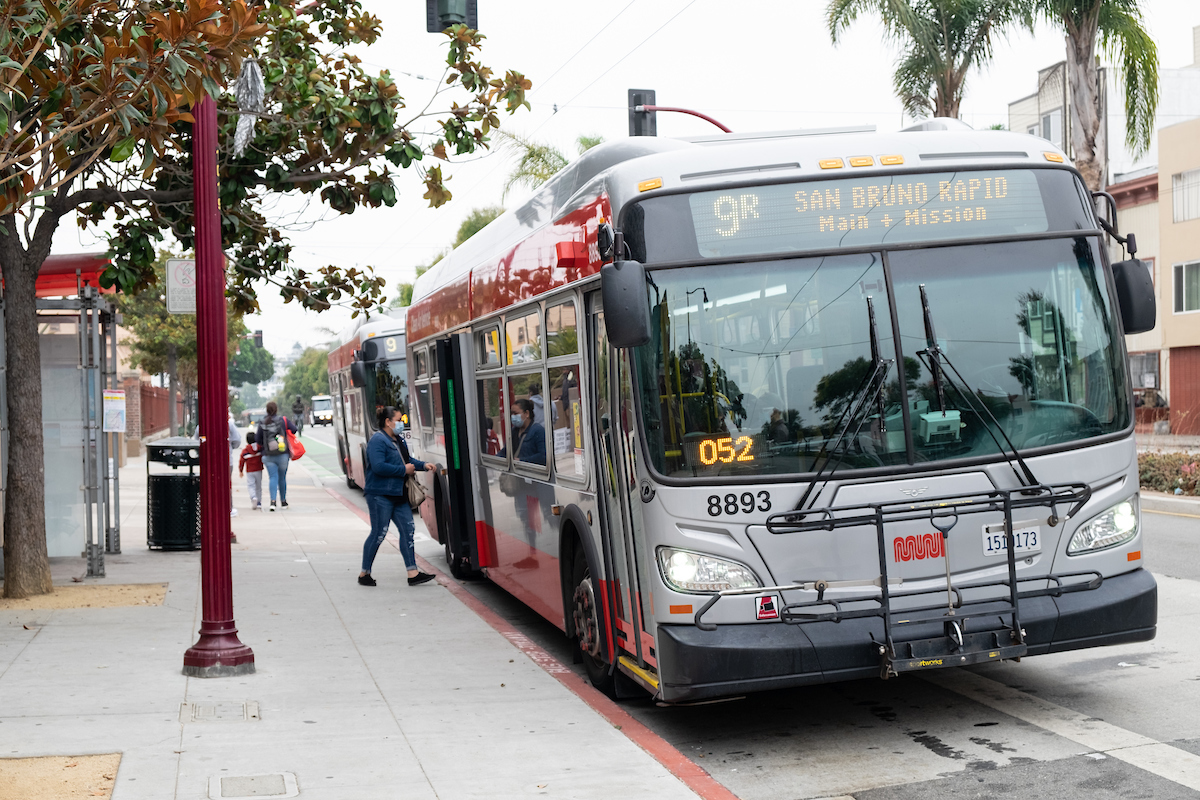
A person is seen boarding the bus along the curb. There are trees in the foreground on the left of the image.

Safety is a Key Priority 

  • Over 50% of respondents cited “Increasing safety from crime on Muni buses” as an extremely urgent priority. 
  • Respondents answering the Community survey in Chinese had the strongest concern about safety. 58% of Chinese speakers consider Muni unsafe from crime, almost a full 20% higher than respondents to the survey in English. 
  • The safety of our customers and staff is a top priority for the SFMTA. We have increased the number of staff riding Muni as a visual deterrent to crime. 
  • We will continue our efforts to make sure all Muni riders are safe and can be confident riding our buses and trains and will update you with our progress.   

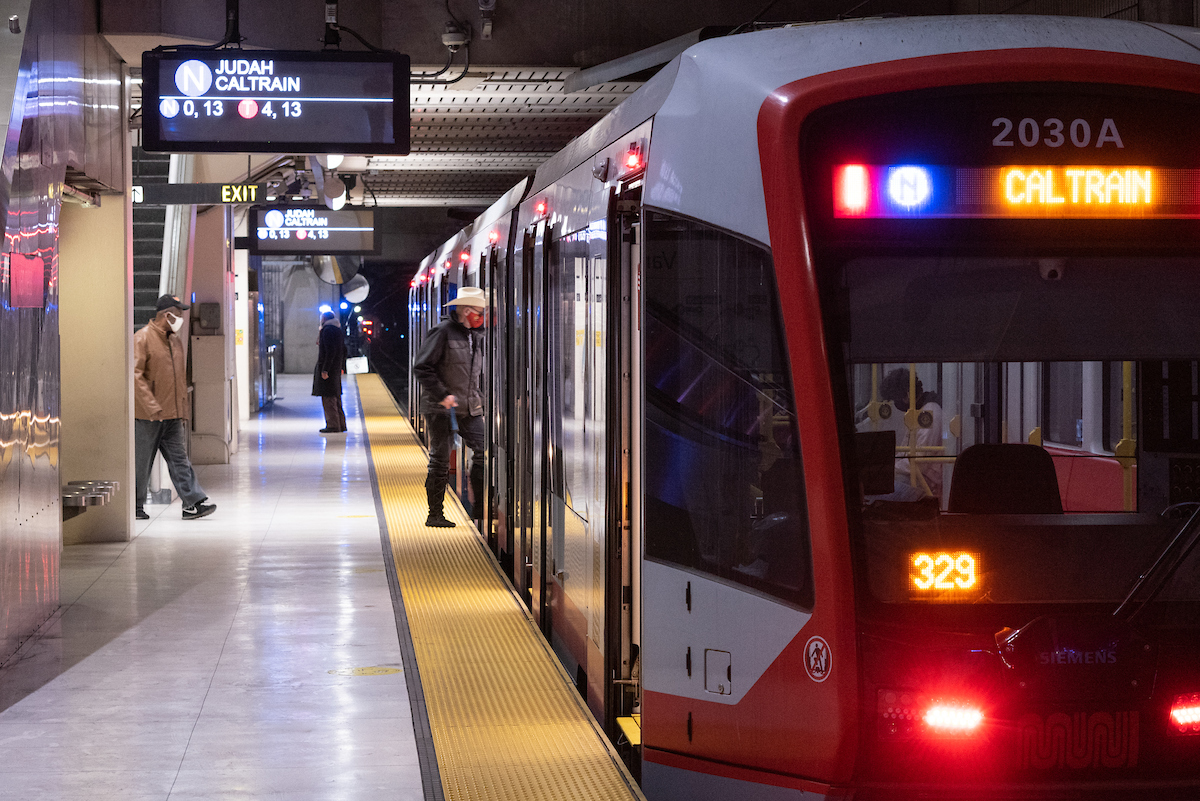
Several passengers are seen boarding a train in a subway. An overheard sign is above with lights.

Increasing Reliability through Repairing and Upgrading our System 

  •  A top priority of respondents is “Repairing and maintaining Muni equipment and facilities to ensure vehicles’ safety, frequency and reliability,” and our commitment to timely repair and maintenance work is in line with that.  
  • Improving Real-Time Communications  
  • Riders would like more reliable real-time communications to help with trip planning.  
  • Improvements to the customer experience can be seen through the ongoing implementation of our new Next Generation Customer Information System.  

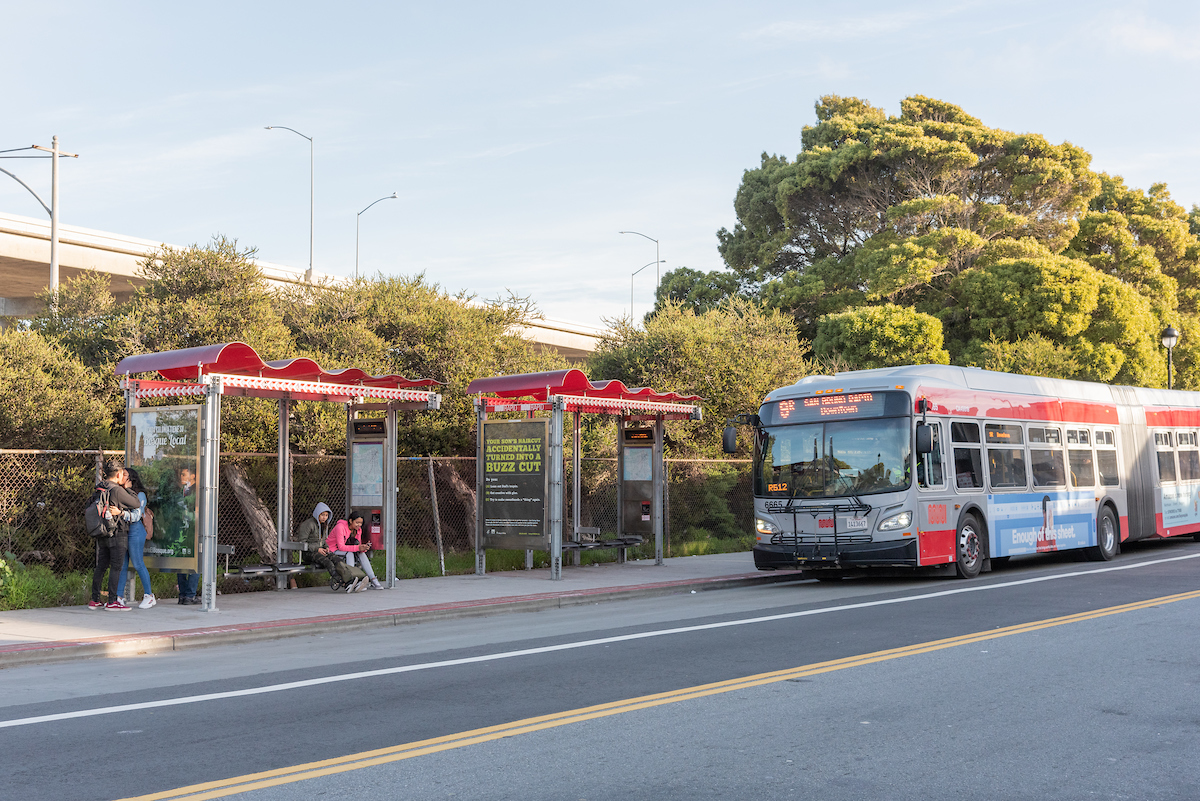
Far shot a bus approaching a bus shelter. There are people sitting and standing.

Respondents Understand the Need for Additional Public Transportation Funding  

  • Finally, a key takeaway from the Community Survey is that respondents want a better and more reliable public transportation system and recognize the need for additional funding to accomplish our shared vision and goals.  
  • Respondents support investing in Muni service as well as expanding safe bike and pedestrian pathways to ensure everyone in the city can access jobs and get where they need to go easily, regardless of their income or neighborhood.  

We agree that an affordable, reliable and safe public transit system is a critical part of a thriving and equitable community. We are committed to working toward this goal and thank our frontline staff for working so hard to improve service. 


Published May 05, 2023 at 12:41AM
https://ift.tt/gRBM6Io

Tuesday, May 2, 2023

Traffic Collisions have Decreased on San Francisco’s Slow Streets

Traffic Collisions have Decreased on San Francisco’s Slow Streets
By Julia Malmo

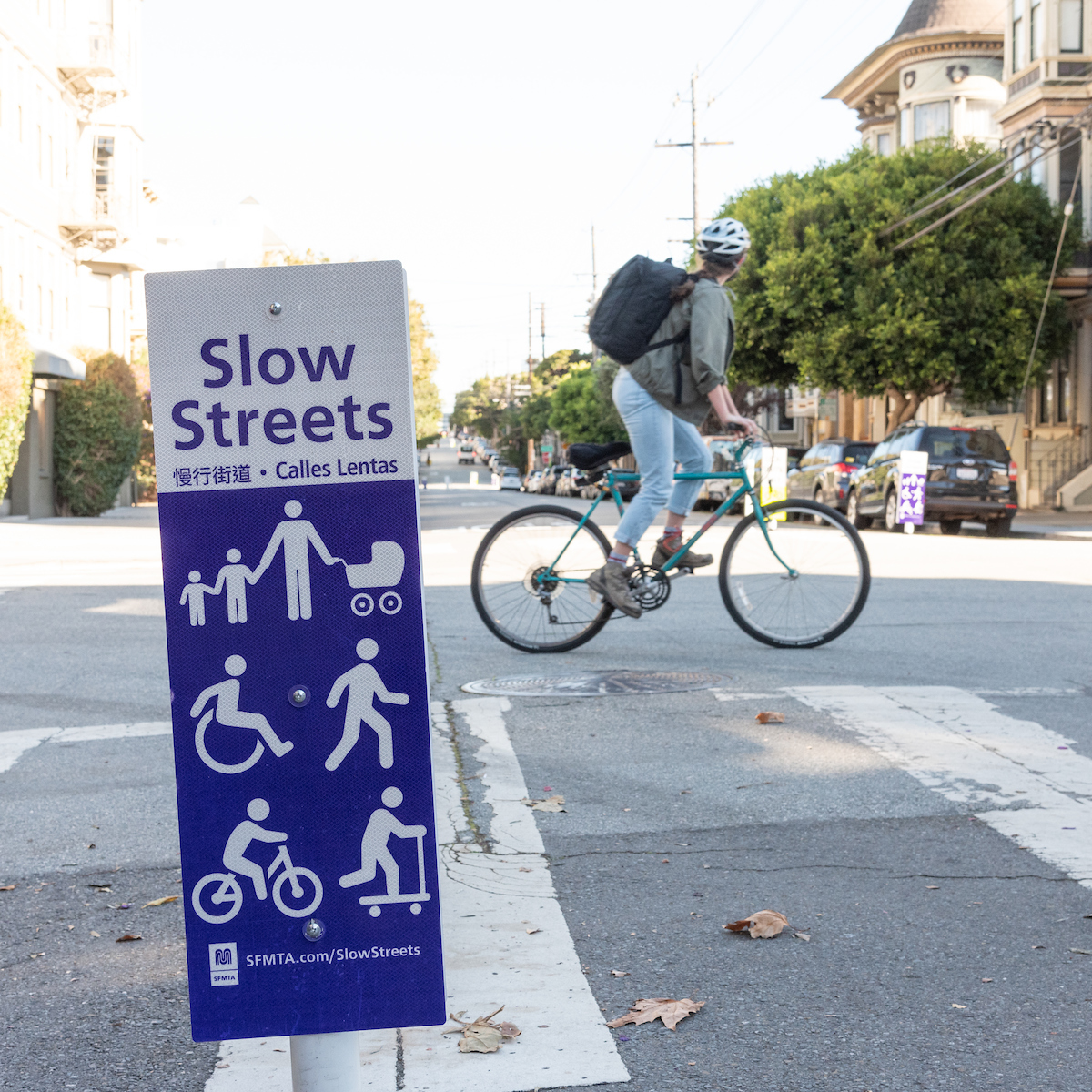
 Close up image of a street sign with the words "Slow Streets." Under white figurine wheel users and pedestrians are seen. There is a bicyclist in the background

As a whole, Slow Streets are safer than they were before being designated Slow Streets 

Streets that are part of the SFMTA’s Slow Streets Program have become measurably safer since the program began in 2020, with the number of traffic crashes falling by almost half. On average, these corridors have seen a 48% drop in collisions following their designation as Slow Streets, compared with a 14% drop in collisions citywide over the same period. Slow Streets also are more welcoming for people who walk, bike and roll. Fewer than 1,000 vehicles per day use all but four of the current Slow Streets (20th Street, Minnesota Street, Noe Street, and Page Street). 

The goal of the program is to create safe, shared streets that are comfortable and enjoyable for people of all ages and abilities, using any mode of transportation. We now can see how it’s doing in a new evaluation report.

When the SFMTA Board approved the permanent Slow Streets Program in December 2022, the Directors required that every Slow Street meet certain safety and comfort targets: average vehicle speeds of less than 15 miles per hour (MPH) and average daily vehicle volumes lower than 1,000. The Slow Streets team has been collecting between January 2023 and April 2023 to understand how the streets are performing. We placed pneumatic tubes every four blocks along Slow Street corridors in January of this year to collect vehicle volume and speed from 16 of the 18 streets currently in the program (Cayuga Avenue and 22nd Street were not included in the analysis because they are not yet implemented).  

Not only is traffic volume down, but all the Slow Streets have median speeds of 20 MPH or slower. However, most have not met the 15 MPH target set by the Board. This means that traffic still is not moving slowly enough for our most vulnerable road users to feel safe. 

 The Slow Streets team will begin working on these changes now with updated designs expected by this summer. 

Here is the 2023 Slow Streets Design Toolkit  (SFMTA.com/SlowStreetsToolkit) including details on the methodology used in the evaluation, along with individual corridor findings. To learn more about next steps, Signup for Email and SMS Alerts from the Slow Streets Program (SFMTA.com/SlowStreets) and individual corridors. We look forward to sharing more about how this data will inform next steps for Slow Streets designs across San Francisco! 


Published May 03, 2023 at 12:03AM
https://ift.tt/V61vKBf

Friday, April 28, 2023

Muni Metro Fix-It Week Maintains the Subway Infrastructure

Muni Metro Fix-It Week Maintains the Subway Infrastructure
By Jessie Liang

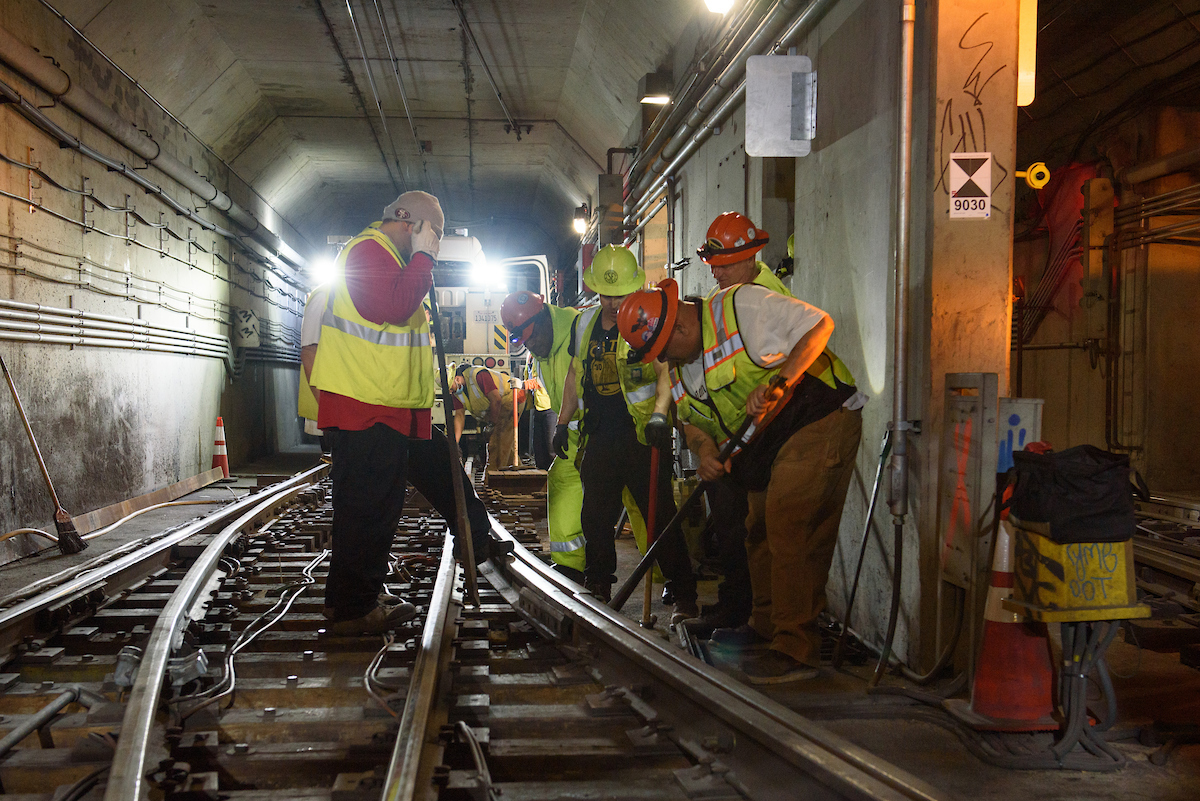
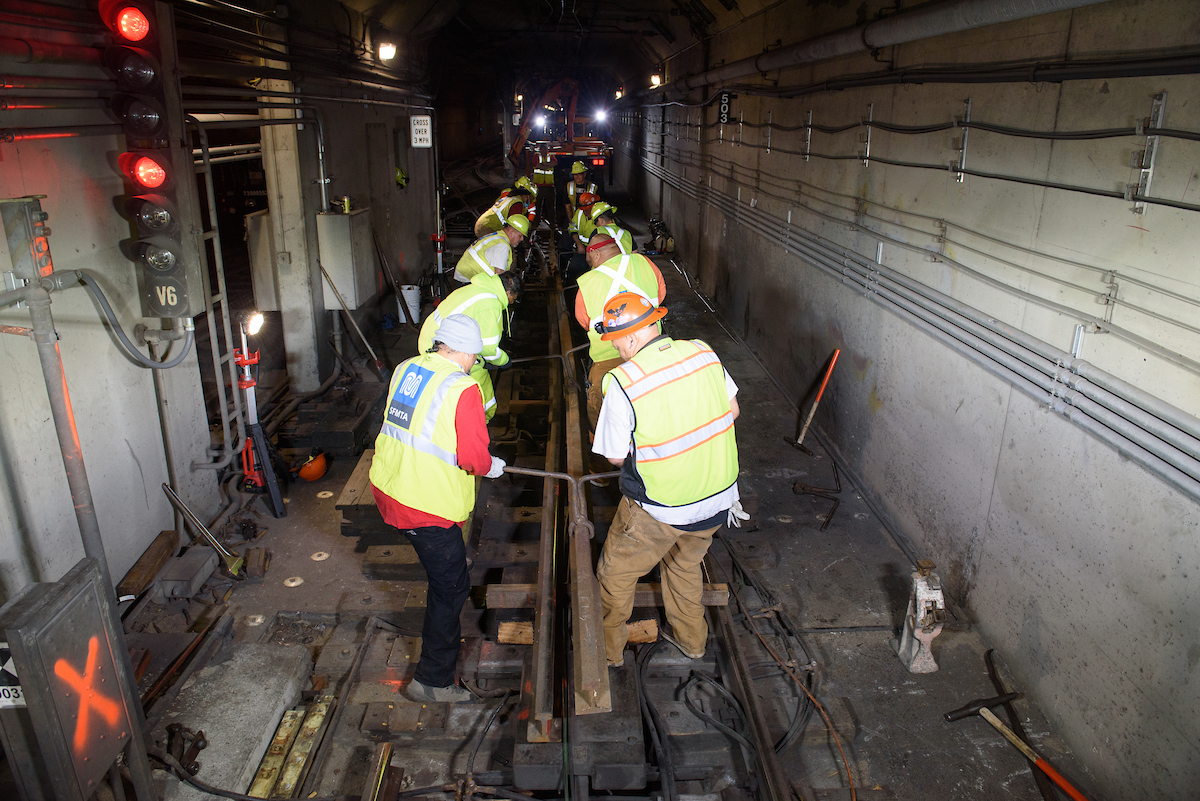
Several crew in safety gear standing over a rail track with tools angled in hand.

Track crew removing old rail at the Van Ness crossover 

The first Muni Metro Fix-It Week of 2023 was a resounding success in March, and it’s also the first Fix-It Week since the SFMTA launched the Central Subway in early January of this year. Here is a behind-the-scenes video recap. Fix-It Week is the SFMTA’s quarterly effort to optimize work time by closing Muni Metro early for critical maintenance. The SFMTA’s Maintenance of Way (MOW) teams did an excellent job maintaining the subway and preventing future breakdowns. 

Fix-It Week helps the Muni Metro get a 20% improvement in speed and about a 20% improvement in reliability in the subway. It takes fewer minutes to take the N Judah from the Outer Sunset to Embarcadero now than it did in 2019. 

 From March 16 to March 22, 2023, the Muni Metro Subway between Embarcadero and West Portal closed at 9:30 p.m. to provide SFMTA maintenance crews an extended window to perform underground infrastructure improvement work that cannot be completed during the usual overnight windows. During the subway closure, buses provided substitute service for Muni Metro lines on the surface and connected all stops on Market Street.   

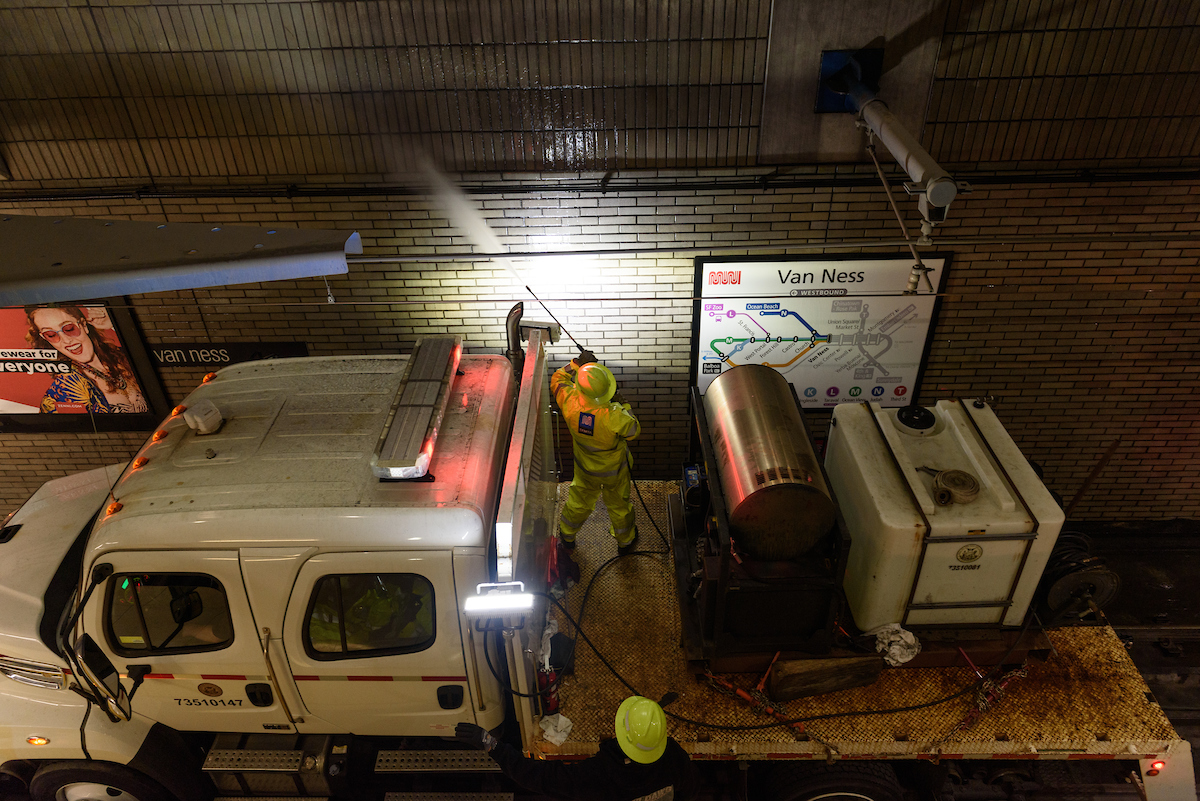
Crew member on the back of a truck spraying water along the side of the tunnel wall. There is a map on the right side and a advertisement board on the left of a woman with sunglasses smiling.

Track crew powerwashing station walls

The goal of Fix-It Week is to make Muni metro subway operations more reliable, ensure safety, and improve the customer experience. Nine MOW teams, Track, Cable Car, Motive Power, Maintenance Engineering, Mechanical Systems, Overhead Lines, Underground, Paint Shop and Signal, were involved in the maintenance work. 

Major maintenance work includes: 

  • Track replacement and reinstallation from the Ferry Portal to the Van Ness Crossover 
  • Mechanical systems cleaning, maintenance and installation  
  • Signal repairs and upgrades, including the demolition of old train control system racks, equipment and wiring 
  •  Track fastener and subway lighting surveys, and drain cleaning around switches  
  • Overhead Line inspections and Overhead Section Break hardware adjustments 
  • Debris removal and traction power substation inspections 
  • Cable Car maintenance and repairs 

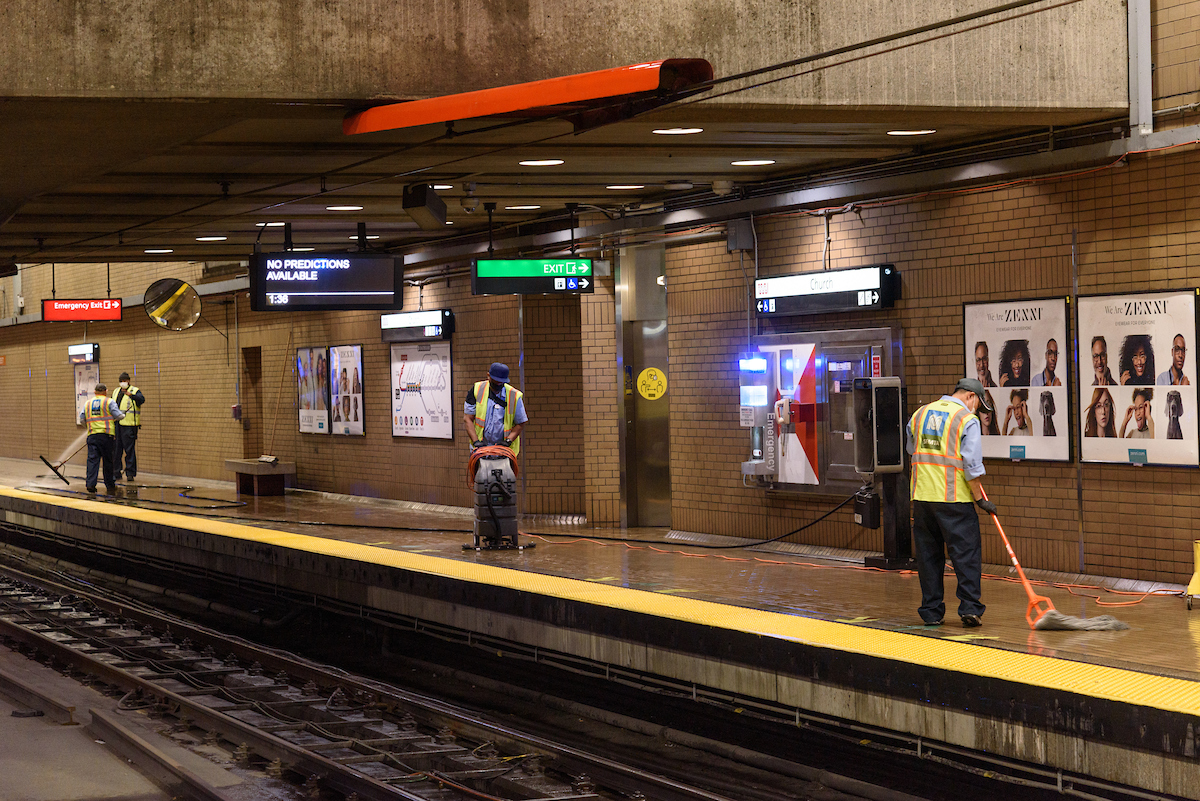
Several crew seen cleaning the ground in a station with a variety of posters and lights on the wall.

Custodial staff cleaning Church Station

The SFMTA teams completed over 2,000 hours of maintenance and inspections over the seven night shutdown. They were able to perform 161 feeder operations, replace more than 125 bulbs for trackway lighting in multiple locations, renew 750 feet of Overhead Contact System contact wire, replace eight blue light phones and inspect approximately 8,000 track fastener plates from the Ferry Portal to Powell Station. 

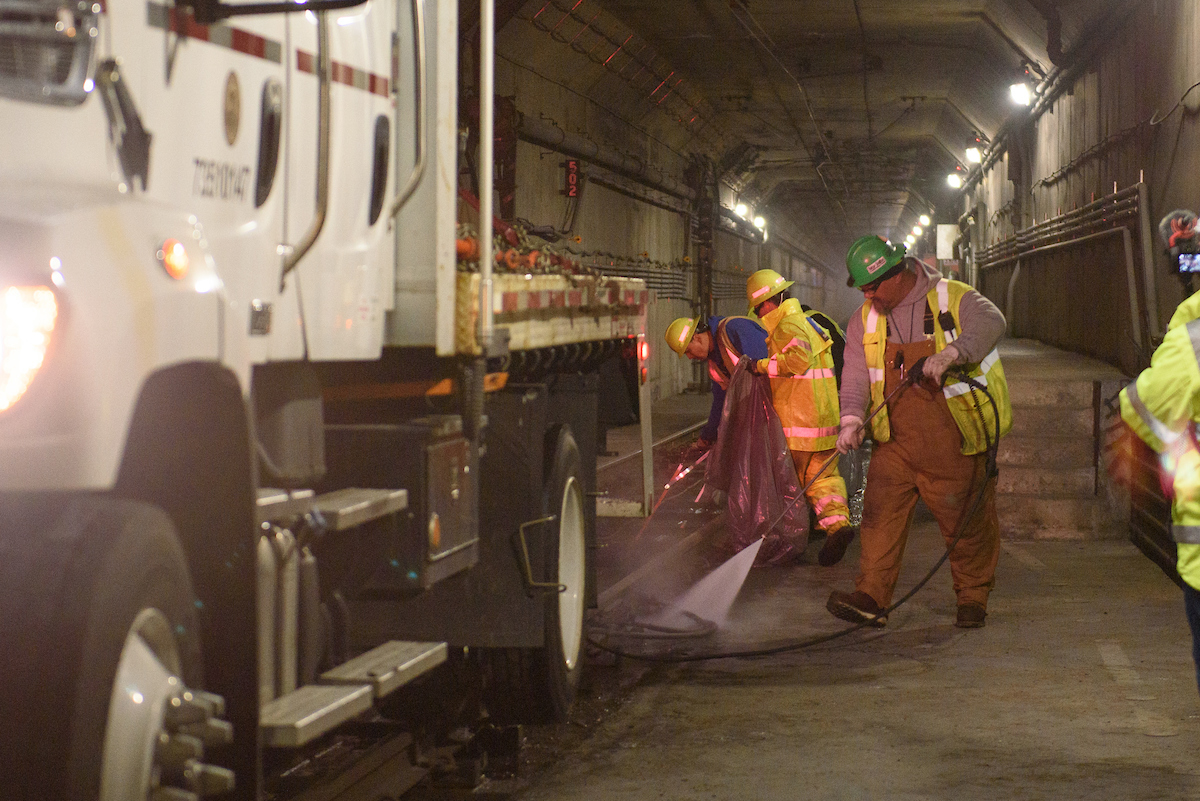
Several crew on spraying water on the tracks alongside a truck.

Track crew powerwashing and removing trash from trackway 

A support team was also contributed to the success of Fix-It Week. These staffers helped coordinate maintenance work, upheld all safety standards and ensured that subway service resumed on time every day. 

The SFMTA will continue to keep the Muni Metro system in a state of good repair. The next Fix-It Week is scheduled for July 2023, and we thank you for your patience and understanding while we do this vital work.  

For more information, visit Muni Metro Maintenance Project (SFMTA.com/SubwayMaintenance).  

Nearly a dozen crew in safety gear all standing on each side of rail track. They are holding the track.

Track crew moving new rail into position by hand at the Van Ness Crossover 


Published April 28, 2023 at 11:47PM
https://ift.tt/mtedjsU

Tuesday, April 25, 2023

SFMTA Retires the Orion, First Hybrid Bus in Cleanest Transit Fleet

SFMTA Retires the Orion, First Hybrid Bus in Cleanest Transit Fleet
By Clive Tsuma

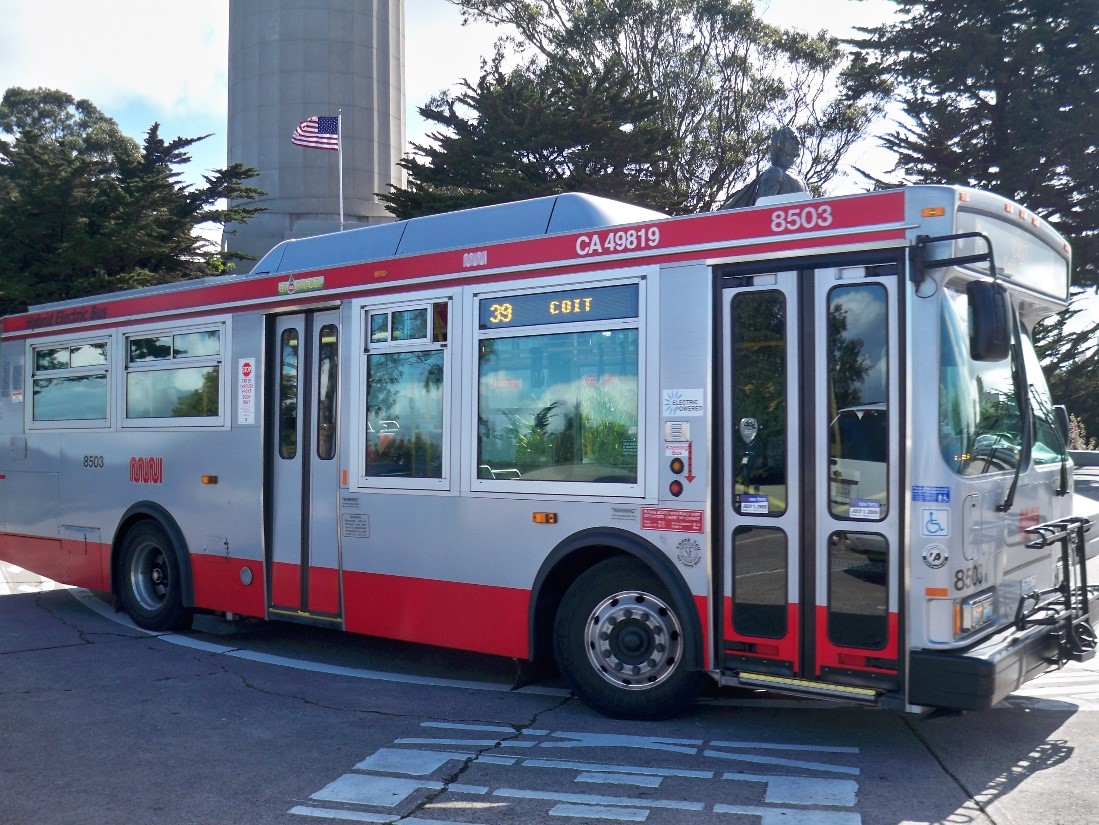
39 Coit Muni bus stopped on the street in front of Coit Tower.

San Francisco’s first low-emissions electric hybrid Orion bus

Muni’s Orion hybrid buses are headed for retirement as we phase in a brand-new batch of El Dorado hybrid electric buses. It’s the end of an era for San Francisco’s first low-emissions electric hybrid fleet that travels the city’s toughest routes.

Orion hybrid fleet tackles Muni’s toughest routes starting in 2007

The Orion buses have been a testament to the SFMTA’s commitment to the latest green transportation technologies. Muni, which previously had relied on a diesel bus fleet in coordination with our electric trolley bus fleet, transitioned to its first 30-foot Orion diesel hybrid-electric buses in 2007. This was the start of the SFMTA’s addition of these lower emission vehicles to one of the greenest fleets in the country, ensuring better air quality city wide.

The Orions brought the agency closer to achieving its goal of an all-electric fleet and a carbon-neutral San Francisco by 2040. This is consistent with San Francisco’s Climate Action Plan to dramatically reduce harmful emissions in communities. 

The Orions’ pint size made them ideal for winding routes like the 36 Teresita, which weaves through Twin Peaks, Diamond Heights, Glen Park and Bernal Heights. Many riders have taken Orions on their adventures along San Francisco’s curving streets, steep hills and tight turns. One can only imagine their sentimental value, especially among those who frequent the 36, as well as the 35 Eureka, 37 Corbett, 39 Coit and 56 Rutland routes.

The Orions were among the first low-floor hybrid buses to serve San Francisco, and the first with closed-circuit security cameras to help keep Muni riders safe. Their interior was fitted with internal destination signs to help customers know when their stop was approaching. The 30-foot coaches were designed to accommodate easier boarding and provide quieter, more efficient operation.

Their arrival offered us an opportunity to train Muni mechanics on hybrid vehicle maintenance. The agency continued to maintain the fleet even after the Orions’ assembly manufacturer went under in 2012.

The new El Dorados are primed to fill the gap left by their predecessors. Like the Orions, they are low-floor buses with a short wheelbase, making them ideal for navigating San Francisco. 

As their taillights fade into the horizon, the Orion hybrid bus fleet takes a much-deserved place in the history of San Francisco transit. They conquered the winding hills of Glen Park and navigated the twisting turns of Telegraph Hill. They will be remembered as the first of Muni’s fleet to pioneer hybrid batteries, moving Muni closer to a zero emissions future.  


Published April 26, 2023 at 12:00AM
https://ift.tt/CPczNyd

Monday, April 24, 2023

This Week is Bike & Roll to School Week!

This Week is Bike & Roll to School Week!
By Crysta Highfield

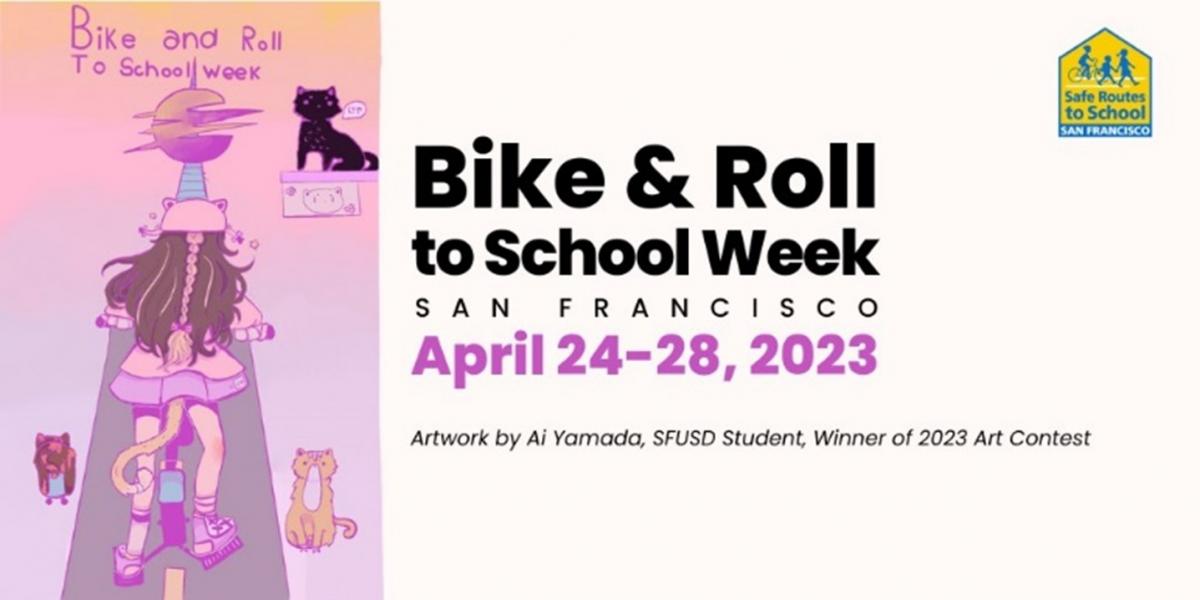
Lightly shaded image of a young bicyclist on a pathway en route to the horizon up ahead with several cats seen including text information

Artwork by Ai Yamada, SFUSD student and winner of 2023 art contest, showing a girl bicycling down a road away from the viewer and featuring three cats. Additional text reads Bike & roll to School Week, San Francisco, April 24-28, 2023.

Hey. San Francisco! It's time to lace up your shoes, put on your helmets, and get ready to roll for Bike & Roll to School Week! Every year, our Safe Route to School program puts on this event to celebrate students getting around on their own power, whether by bike, wheelchair, scooter or skateboard, walking, or any other form of active transportation! This year’s celebration is April 24-28, at schools citywide.

San Francisco Safe Routes to School is a partnership of city agencies and nonprofits, led by the SFMTA, that helps make walking and bicycling to school safer and more accessible for all San Francisco children and youth and to increase the number of families who choose to walk, bicycle, take public transit, or join carpools on their way to and from school.

Bike & Roll to School Week demonstrates the joy and empowerment that comes with choosing sustainable modes of transportation and encourages students to adopt healthy habits that will benefit them for the rest of their lives. Walking, biking or rolling to school embodies the importance of being environmentally conscious and prioritizing health and well-being. And with fewer students being driven to school, pick-up and drop-off times are less congested with car traffic, and therefore safer and easier for everyone.

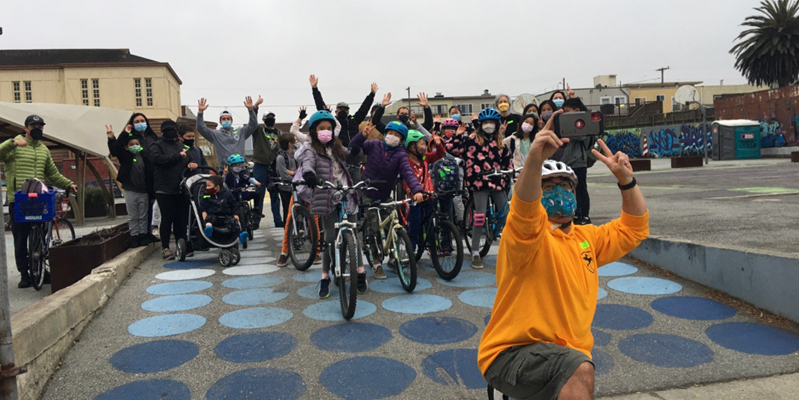
A large group of youth and students taking a photo on a courtyard. Some are on bikes. Everyone is smiling and raising their hands. There is an adult in the foreground taking the selfie picture.

: Photograph of a group of students and parents on bicycles in a schoolyard enthusiastically raising their arms in the air, with one adult in the foreground taking a “selfie” photo of the group on a cell phone.

Join in on the fun! There are many ways for students, families and school staff to get involved:

See if your school is registered! Each school’s celebration is made possible by volunteer “Bike Champions” from the school community who are eager to share the joy of healthy and sustainable mobility with their students and families. San Francisco Safe Routes to School provides everything needed to make it a great event.

Pledge to bike or roll to school during the week! Everyone who pledges to participate will be entered into a drawing for great prizes, courtesy of Cleary Bikes and Mike’s Bikes.

You can even join the fun from inside your home or classroom by entering the Bike & Roll Art Contest. All SFUSD students are invited to enter the art contest, in which students at every age level can win prizes. Entries are due by May 10, 2023 and the grand prize winner will be featured on the BR2SW poster for 2024!

Learn more about our Safe Routes to School program by visiting www.sfsaferoutes.org


Published April 25, 2023 at 01:51AM
https://ift.tt/C1EVZov

Thursday, April 20, 2023

Muni Improvements Draw Increased Ridership

Muni Improvements Draw Increased Ridership
By Kate McCarthy

Buses driving towards downtown on Geary Boulevard.

38 Geary buses zip downtown on new transit lanes that improve travel times for Muni riders.

As Earth Day approaches and we think about how to encourage more people to take non-car trips, recent Muni improvement projects are drawing increased ridership across the city. While Muni ridership downtown has not yet rebounded to pre-pandemic levels, ridership has gone up on Muni lines where we have improved speed and frequency of Muni service. 

Muni is a lifeline for many of our riders: 70% of Muni riders have an annual income of less than $50,000. As we restored and added Muni service after the start of the pandemic, we invested in the routes that serve people who rely on transit and need it most. For example, after we installed transit lanes, increased frequency and re-routed the 22 Fillmore to bring people to their jobs and medical appointments in Mission Bay, ridership increased to 107% of pre-pandemic levels on weekdays and 118% on weekends. 

Since the start of the pandemic, we’ve implemented more than 21 miles of new transit priority lanes, growing our transit lane network (https://ift.tt/7oc6MX3) to over 70 miles. These transit lanes are improving travel times for Muni riders across the city. After transit lanes were installed on Mission Street in downtown, travel times on the 14 Mission and 14R Mission Rapid are now 31% quicker. 

Ridership numbers on the 49 Van Ness-Mission also blossomed to 109% of pre-pandemic ridership on weekdays and 114% on weekends after construction on the Van Ness BRT corridor was completed last April. With physically-separated transit lanes and transit signal priority that gives the green light to Muni and Golden Gate Transit buses, riders there are seeing travel times reduced by 35%. 

A similar story has emerged on San Francisco’s busiest transit boulevard — Geary. Like other lines that serve downtown, the 38 Geary hasn’t fully recovered to pre-pandemic ridership levels. But the route did nab a spot in the top 10 highest recovered routes in the Muni system. The 38 Geary’s 36,000 daily riders have recently seen travel time savings of up to 18% since we installed three miles of new transit lanes, bus stop changes and other improvements as part of the Geary Rapid Project. We plan similar improvements on the western end of the corridor as part of the Geary Boulevard Improvement Project.     

Muni riders have noticed that improvements to our busiest Muni lines are making service faster and more reliable than it has been in decades. Two-thirds (66%) of Muni riders who took our Annual Muni Rider Survey last fall rated Muni service as “good” or “excellent” — a 9% increase from 2021 and the strongest increase since 2018. 

These improvements can’t come soon enough. Most of San Francisco’s greenhouse gas emissions come from cars and trucks. As the urgency to address climate change mounts, so does the need to get the most out of our Muni system. To inspire riders to come back to Muni, we’re working hard to bring back the Muni system our city deserves: One that is thriving with the better frequency, improved reliability and better connections that these projects are delivering. 


Published April 21, 2023 at 02:24AM
https://ift.tt/WI6fe1J

Tuesday, April 18, 2023

There’s a Community Shuttle Coming to the Bayview

There’s a Community Shuttle Coming to the Bayview
By

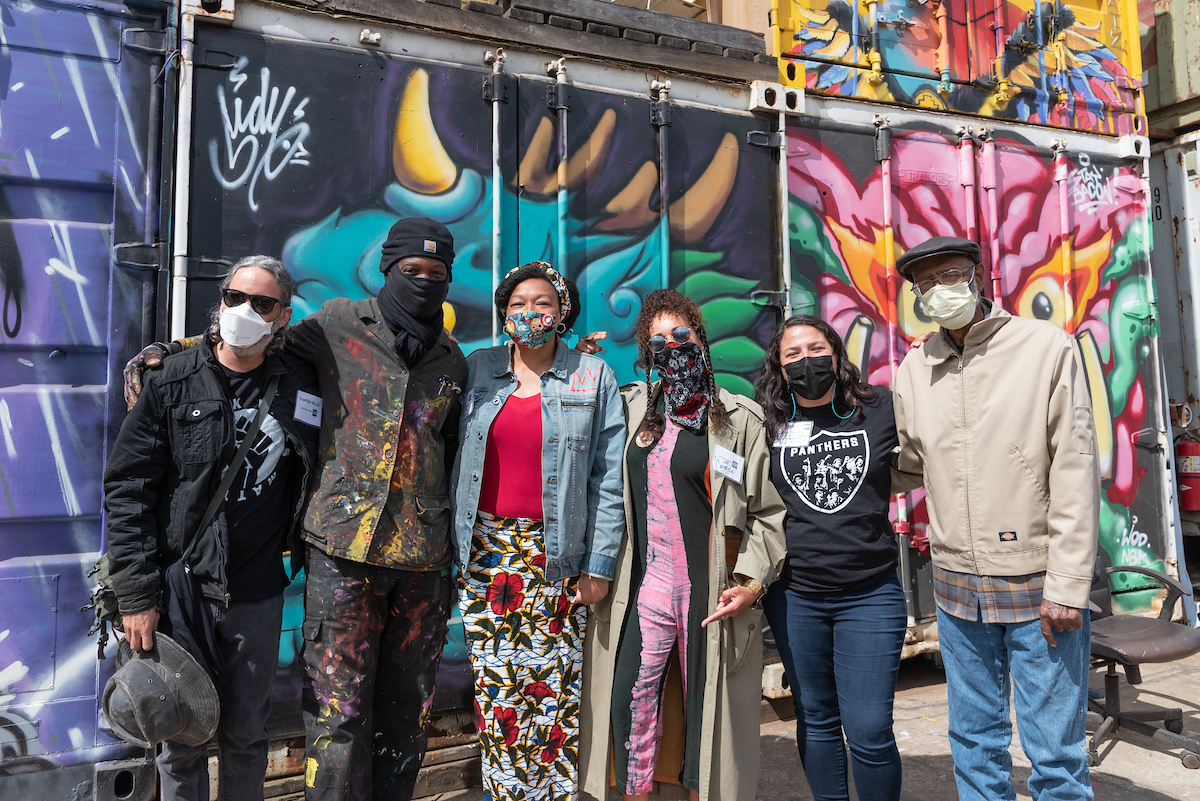
Several individuals with masks huddle for a group photo in front of a colorful mural backdrop in an our setting.

A new shuttle to serve Bayview’s diverse communities

A new community shuttle is coming to Bayview-Hunters Point in January of 2024, and we need your help designing it! The SFMTA is partnering with the California Air Resources Board and nine community-based organizations to launch a dynamic service community shuttle that truly meets your needs. A community shuttle has been a long-desired service for this geographically isolated community, and was identified as a top priority in the Bayview Community Based Transportation Plan. This program builds off of previous community shuttle efforts like the Bayview Moves program. To share your voice, take our survey now or attend one of our upcoming community partner events.

A “dynamic service” shuttle is one that doesn’t have a fixed route like a bus line, but instead operates in a “service area.” The shuttle will pick up and drop off riders anywhere within the Bayview area and connect them to hard-to-reach destinations like community centers, regional transit and grocery stores. Combined with Muni service, this program will help Bayview-Hunters Point residents get around more easily while reducing car trips and improving air quality.

A Community Shuttle only works if it is accessible, feels welcoming and gets people where they need to go. That’s why the SFMTA will be working with residents through the summer and fall of 2023 to build a service plan that works for the community.

This is where you come in. We want to know how you might use a shuttle like this. Would you use it during commute hours or on nights and weekends? Would you ride within your immediate neighborhood or to destinations like the 24th Street BART station and SF General Hospital? How long would you wait for a shuttle to arrive? Would you walk to the corner or a block away for a pickup? Answers to these questions will help us build a shuttle that meets your needs.

We want to establish shuttle service that effectively serves the people living in Bayview-Hunters Point today, and the more feedback we get, the better. You can get involved in the following ways:

This program also includes job training, a Community Congress that will provide project oversight, and a Third Street storefront for transit information and services. You can find more information on our Fact Sheet.


Published April 19, 2023 at 02:42AM
https://ift.tt/gMwvKBL

Tuesday, April 11, 2023

10 Reasons to Love San Francisco Parking Control Officers

10 Reasons to Love San Francisco Parking Control Officers
By Andrea Buffa

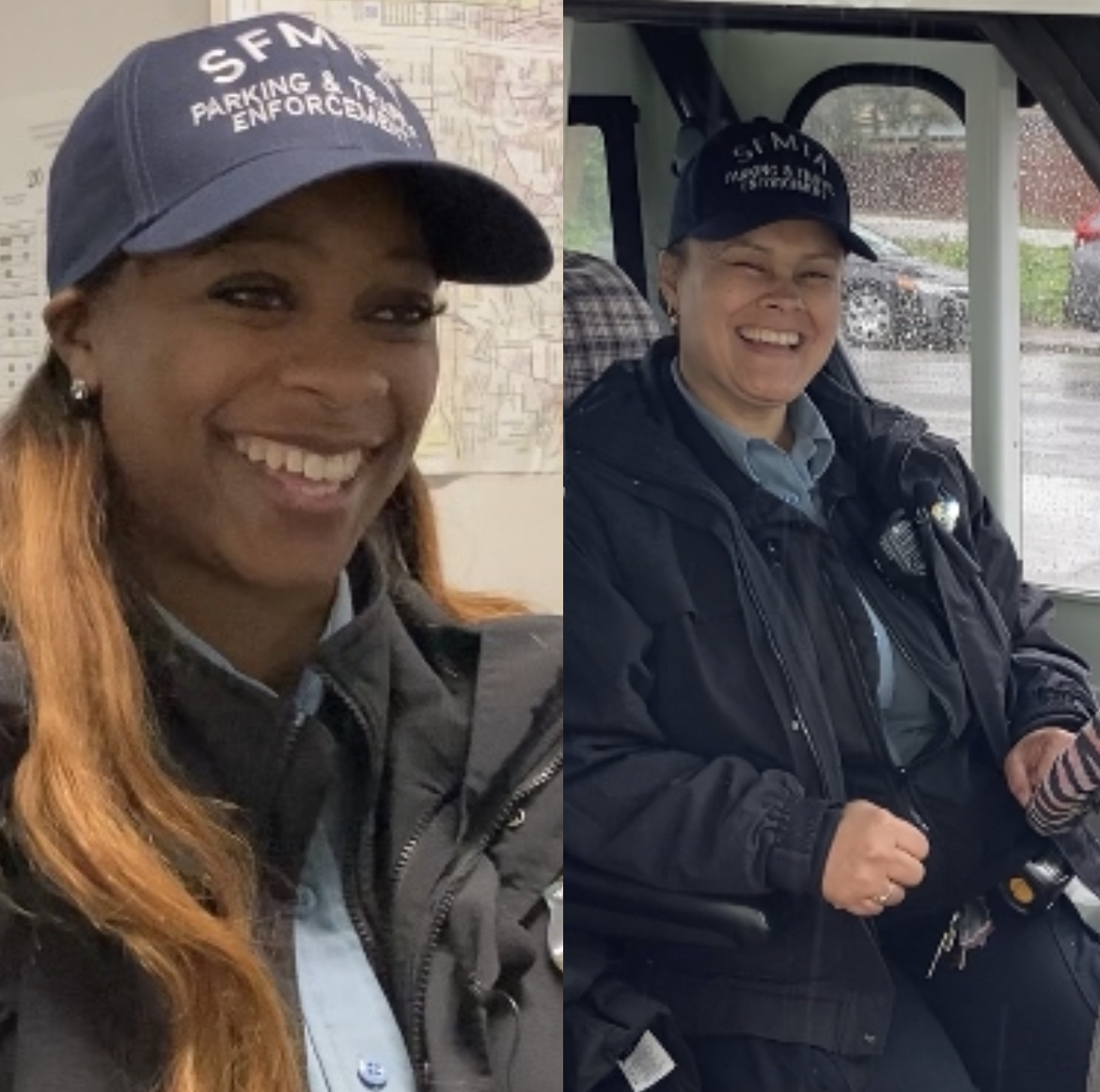
Two Parking Control Officers side by side smiling in an office setting and while sitting in a parking enforcement vehicle.

SMILE, ready for our close ups! To learn more about the day in the life of a hard working Parking Control Officer (PCO), take a look here.

It isn't easy being a parking control officer (PCO) in San Francisco. None of us likes to get a parking ticket, and we sometimes wrongly take out our frustrations on the PCOs who are simply doing their job to keep San Francisco moving.

To help you avoid veering off into negativity during your next encounter with an SFMTA Parking Control Officer, we’re providing you with this list of reasons you should actually love PCOs. Keep your favorite reason in mind next time you see a PCO on the street. Instead of getting angry with them, you might even consider appreciating them for dedicating themselves to this tough job rain or shine.

Top 10 reasons to love San Francisco Parking Control Officers: 

  1. They keep the intersections in the Financial District clear — and pedestrians safe — when commuters are desperately trying to get to the Bay Bridge at the end of the workday. 

  1. They respond to your complaints when someone’s car is blocking your driveway or there’s a vehicle that’s been parked on your street for so long that it might be abandoned. 

  1. They make sure disabled parking spots are available for people with disabilities — and aren’t being taken up by people who shouldn’t be using those spots. 

  1. They direct traffic during major sports events, including the Warriors and Giants games, so fans can get to the game on time. 

  1. They also direct traffic during major events like the Pride parade. On those days, they sometimes work 12-hour shifts to make sure the show goes on. 

  1. They respond in moments of crisis – like during the pandemic when they helped direct traffic in and out of COVID-19 testing and vaccination centers. 

  1. They make sure San Francisco firefighters can get to the fire hydrant when there’s a fire, which means making sure cars aren’t blocking the hydrant. 

  1. They support citywide efforts like the Healthy Streets Operation Center so city workers involved in addressing homelessness and unhealthy street behavior can do their jobs safely. 

  1. They stop people from double parking in the middle of the street, especially on retail corridors, which slows down Muni, creates traffic and can endanger pedestrians and people who bike, scoot, use a wheelchair or skateboard. 

  1. They’re happy to give you directions if you need them. 

There are many other things PCOs do to keep San Franciscans and city visitors safe and able to move around the city. So, let’s celebrate them instead of hating on them! And don’t forget, taking out your anger workers who provide you with a service is not okay. Ever. If you get a ticket you disagree with, contest the citation: Contest a Citation | SFMTA 

Text on a white background saying "Good People Tough Jobs"


Published April 11, 2023 at 10:32PM
https://ift.tt/sz0tPJ8

10 Reasons to Love San Francisco Parking Control Officers

10 Reasons to Love San Francisco Parking Control Officers
By Pamela Johnson

Two Parking Control Officers side by side smiling in an office setting and while sitting in a parking enforcement vehicle.

SMILE, ready for our close ups! To learn more about the day in the life of a hard working Parking Control Officer (PCO), take a look here.

It isn't easy being a parking control officer (PCO) in San Francisco. None of us likes to get a parking ticket, and we sometimes wrongly take out our frustrations on the PCOs who are simply doing their job to keep San Francisco moving.

To help you avoid veering off into negativity during your next encounter with an SFMTA Parking Control Officer, we’re providing you with this list of reasons you should actually love PCOs. Keep your favorite reason in mind next time you see a PCO on the street. Instead of getting angry with them, you might even consider appreciating them for dedicating themselves to this tough job rain or shine.

Top 10 reasons to love San Francisco Parking Control Officers: 

  1. They keep the intersections in the Financial District clear — and pedestrians safe — when commuters are desperately trying to get to the Bay Bridge at the end of the workday. 

  1. They respond to your complaints when someone’s car is blocking your driveway or there’s a vehicle that’s been parked on your street for so long that it might be abandoned. 

  1. They make sure disabled parking spots are available for people with disabilities — and aren’t being taken up by people who shouldn’t be using those spots. 

  1. They direct traffic during major sports events, including the Warriors and Giants games, so fans can get to the game on time. 

  1. They also direct traffic during major events like the Pride parade. On those days, they sometimes work 12-hour shifts to make sure the show goes on. 

  1. They respond in moments of crisis – like during the pandemic when they helped direct traffic in and out of COVID-19 testing and vaccination centers. 

  1. They make sure San Francisco firefighters can get to the fire hydrant when there’s a fire, which means making sure cars aren’t blocking the hydrant. 

  1. They support citywide efforts like the Healthy Streets Operation Center so city workers involved in addressing homelessness and unhealthy street behavior can do their jobs safely. 

  1. They stop people from double parking in the middle of the street, especially on retail corridors, which slows down Muni, creates traffic and can endanger pedestrians and people who bike, scoot, use a wheelchair or skateboard. 

  1. They’re happy to give you directions if you need them. 

There are many other things PCOs do to keep San Franciscans and city visitors safe and able to move around the city. So, let’s celebrate them instead of hating on them! And don’t forget, taking out your anger workers who provide you with a service is not okay. Ever. If you get a ticket you disagree with, contest the citation: Contest a Citation | SFMTA 

Text on a white background saying "Good People Tough Jobs"


Published April 11, 2023 at 10:32PM
https://ift.tt/sz0tPJ8

Thursday, March 30, 2023

The Municipal Railway Planning Division & The First 5-Year Plan

The Municipal Railway Planning Division & The First 5-Year Plan
By Kelley Trahan

The San Francisco Municipal Railway 5-Year Plan, 1979-1984 was the first comprehensive service plan created by the first San Francisco Municipal Railway transportation planners. The plan introduced a grid system to provide more efficient crosstown service with better neighborhood connections that would improve access and increase ridership, moving away from Muni’s prior service design focused on trips to and from downtown. It also provided service standards, including coverage, capacity and stop spacing, many of which continue to inform Muni planning efforts today. The San Francisco Municipal Railway saw many changes at this time, including the opening of the Muni Metro, the conversion of some lines from diesel to electric trolley bus, a simplified fare structure and increased fares and historic streetcar service on Market Street. 

Prior to the mid-1970s, the San Francisco Municipal Railway’s service development was determined by a mix of privately-operated transit systems it had acquired, rather than one master transit plan. This changed when the federal government required the agency to submit a 5-year plan to be eligible for funding.  

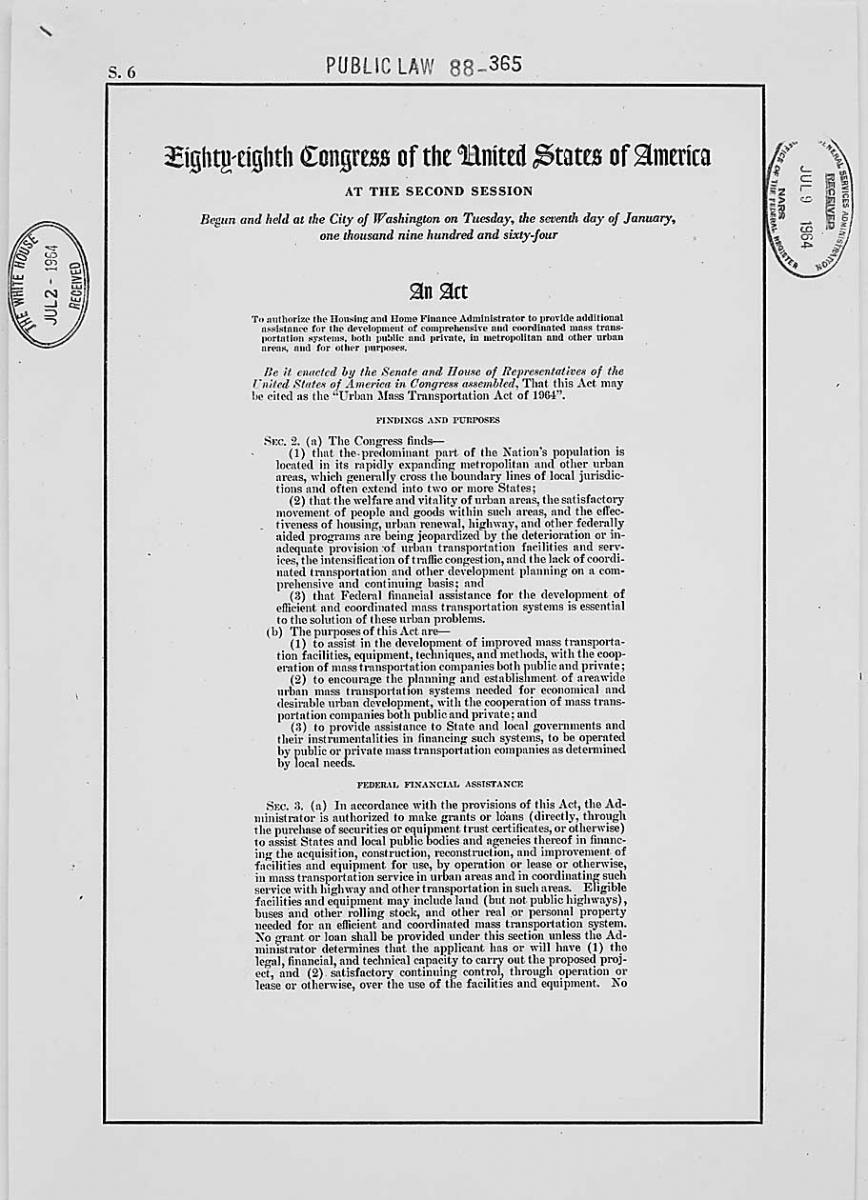
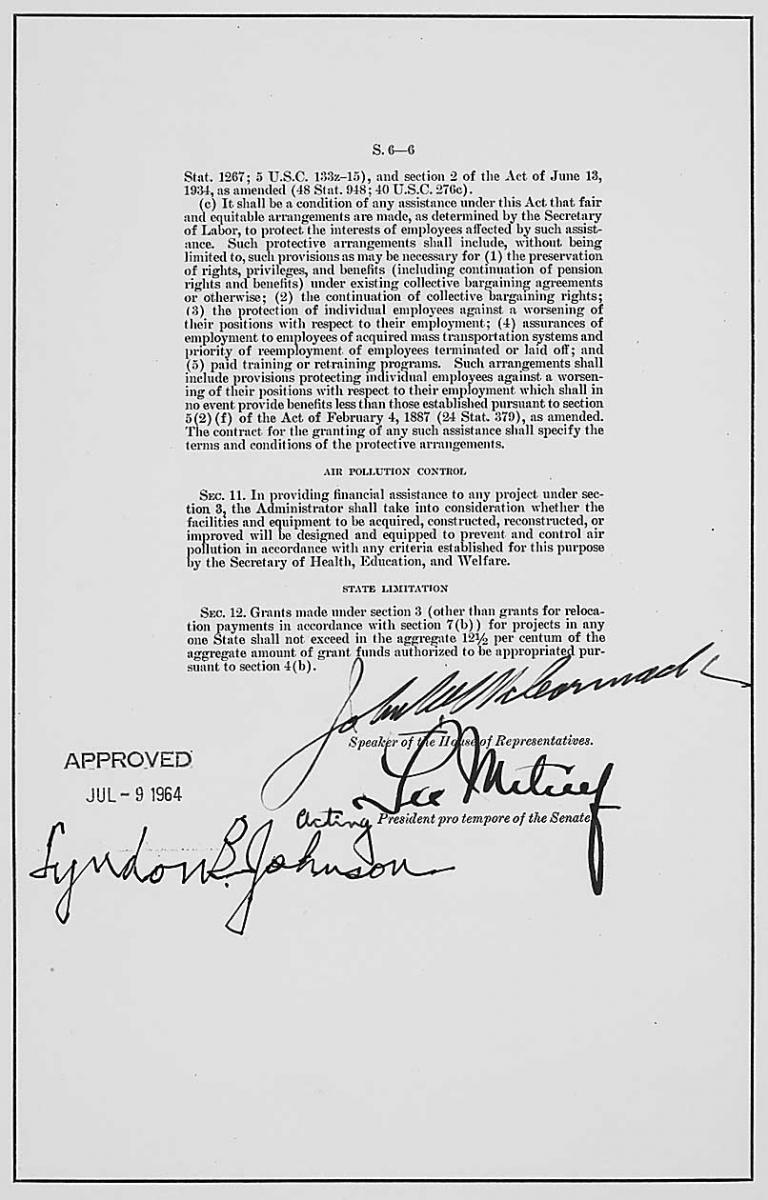
The entire process began when President Lyndon B. Johnson signed the Urban Mass Transportation Act of 1964 into law in response to the nation’s long-term transportation investment needs. The new law provided grant and loan money to local transportation systems and created an oversight agency, the Urban Mass Transportation Administration (UMTA), which would be renamed the Federal Transit Administration (FTA) in 1991. The Metropolitan Transportation Commission (MTC) then was put together by the California State Legislature in 1970 and tasked with reviewing transportation grant applications submitted by agencies in the state. 

Text of documentation with signatures towards the bottom of the page with time stamped notation of 1964


Text of documentation with signatures towards the bottom of the page with time stamped notation of 1964

Urban Mass Transportation Act of 1964, Public Law 88-365, 78 STAT 302

An in-depth study of Muni was undertaken in 1974 by Wilbur Smith & Associates, a private consultant and author of the UMTA’s Characteristics of Urban Transportation Demand: A Handbook for Transportation Planners. The Municipal Railway Planning, Operations and Marketing (POM) Study was completed in 1977 and analyzed the Muni system and the travel needs of its riders and made recommendations for a 5-Year Plan. 

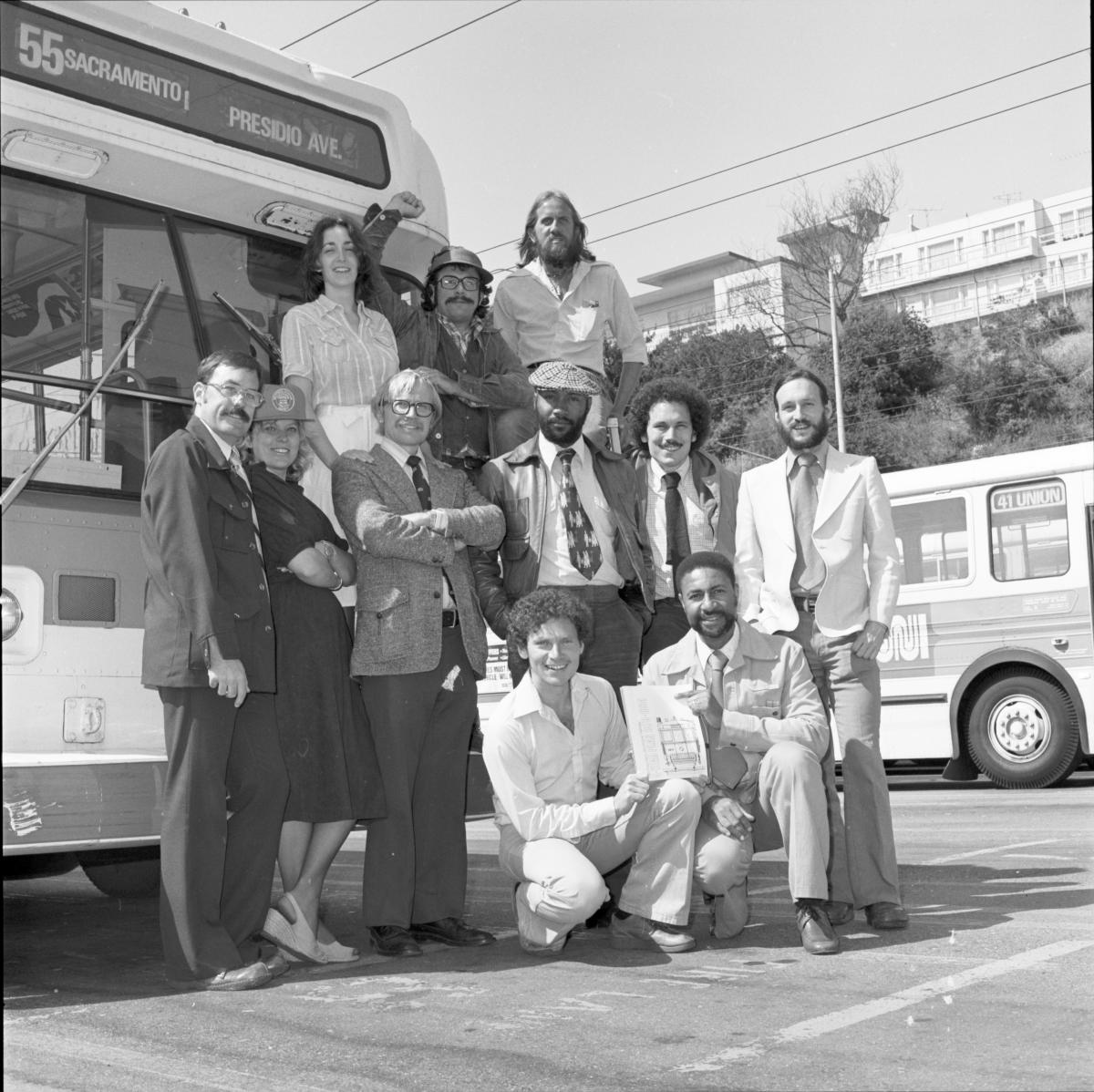
 A new in-house Muni Planning Division that had been created with UMTA funding in 1974 presented the POM Study at more than 70 community meetings, and after intense review and several revisions, The San Francisco Municipal Railway 5-Year Plan, 1979-1984 was drafted. 

A dozen people dressed in business casual posting for a group photo in front of a bus in what seems to be a bus yard. They are positioned in several different tiers.

Muni Planning Division Employees in Presidio Trolley Coach Yard, May 17, 1979

Since that first plan was written, transportation planning at the SFMTA has expanded to include capital projects, street design, bike lanes, paratransit, parking, historic streetcars and much more, while promoting safety, equity and sustainability. The SFMTA continues to publish an operating and service plan approximately every 10 years, now called the Short-Range Transit Plan (SRTP), which is based on the needs, goals and agency priorities to serve the people of San Francisco. 


Published March 30, 2023 at 11:56PM
https://ift.tt/70MuFgL

Friday, March 17, 2023

San Francisco’s Transit-First Policy Turns 50

San Francisco’s Transit-First Policy Turns 50
By Michael Delia

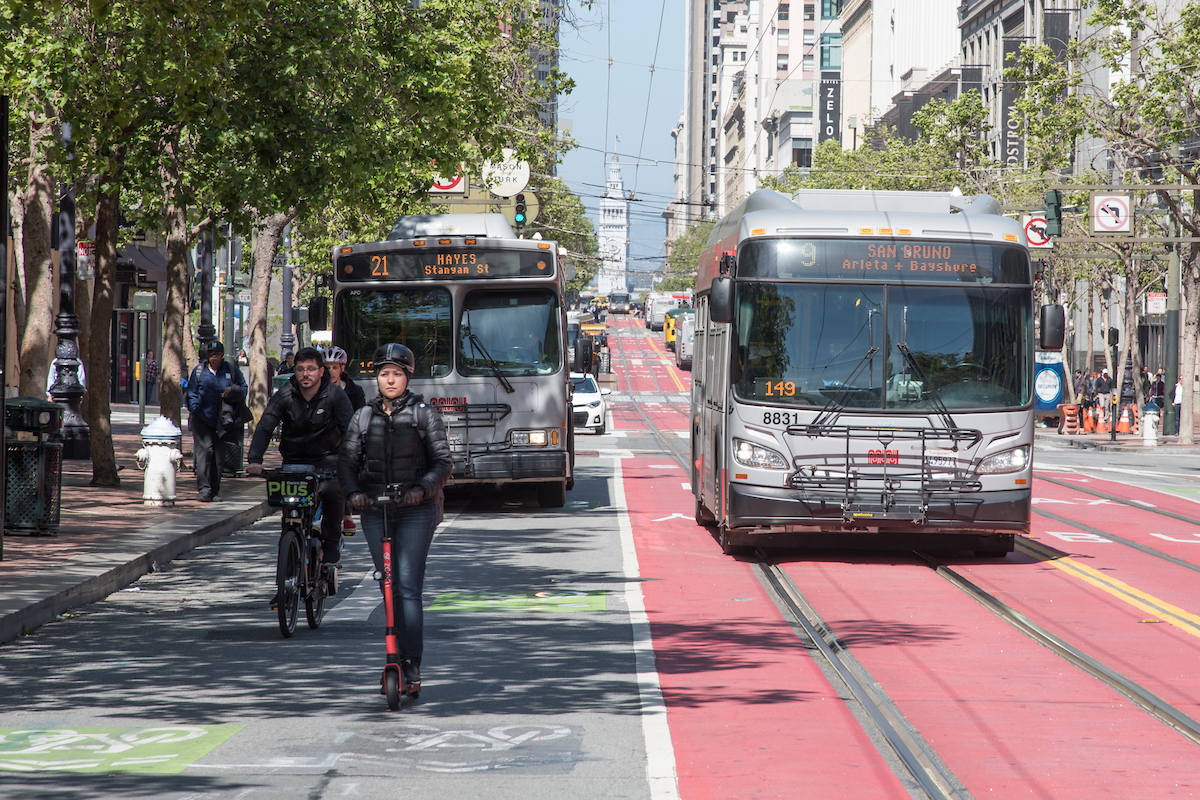
Two buses, a bicyclist, a pedestrian and person riding a scooter all on Market Street.

Transit on Market Street in downtown San Francisco, 2018

It’s been a half-century since the San Francisco Board of Supervisors put transit needs above all other traffic initiatives, and now, the city’s Transit-First policy is celebrating its golden anniversary. The policy guides the city’s work on major infrastructure projects and planning efforts. Its principles drive San Francisco officials to promote incentives that reduce traffic congestion and solo vehicle trips, support transit investments including the purchase of Muni buses and light rail vehicles, and regularly evaluate how well our transportation network functions. 

Adopted on March 19, 1973, the original Transit-First policy was born out of an effort to reshape the Municipal Railway so it could serve San Franciscans' needs more effectively. The goals were very specific: 

  • Create exclusive bus lanes and prohibit automobiles from streetcar and cable car tracks. 
  • Restrict turning movements of automobiles that conflicted with transit vehicles. 
  • Extend sidewalks at transit stops to allow boarding from the travel lane.  
  • Strictly enforce parking codes and tow-away regulations along major transit corridors. 
  • Consider the use of preemptive traffic signals for transit vehicles. 

By the early 70s, San Francisco streets had become increasingly crowded. The Freeway Revolt just over a decade earlier led to the cancellation of planned highway construction in the city, and an office boom downtown was bringing in thousands of commuters. Meanwhile, the San Francisco Bay Area Urban Renewal Association (SPUR) began a comprehensive review of Muni’s operations in 1972. The organization interviewed operators and management, conducted line checks and reviewed company properties and processes to identify areas for improvement. 

“The recurring theme was most Muni vehicles were operating in traffic. This was the source of many problems — schedule bunching, accidents, unhappy operators and riders,” said Jim Chappell, executive director of SPUR from 1994-2009. 

The recommendations in SPUR’s report, “Building a New Muni,” were well-received by the mayor and city supervisors, and the Transit-First policy was passed not long after its release. Transit-First also addressed concerns about increased air pollution and environmental damage by effectively putting the personal automobile on notice. 

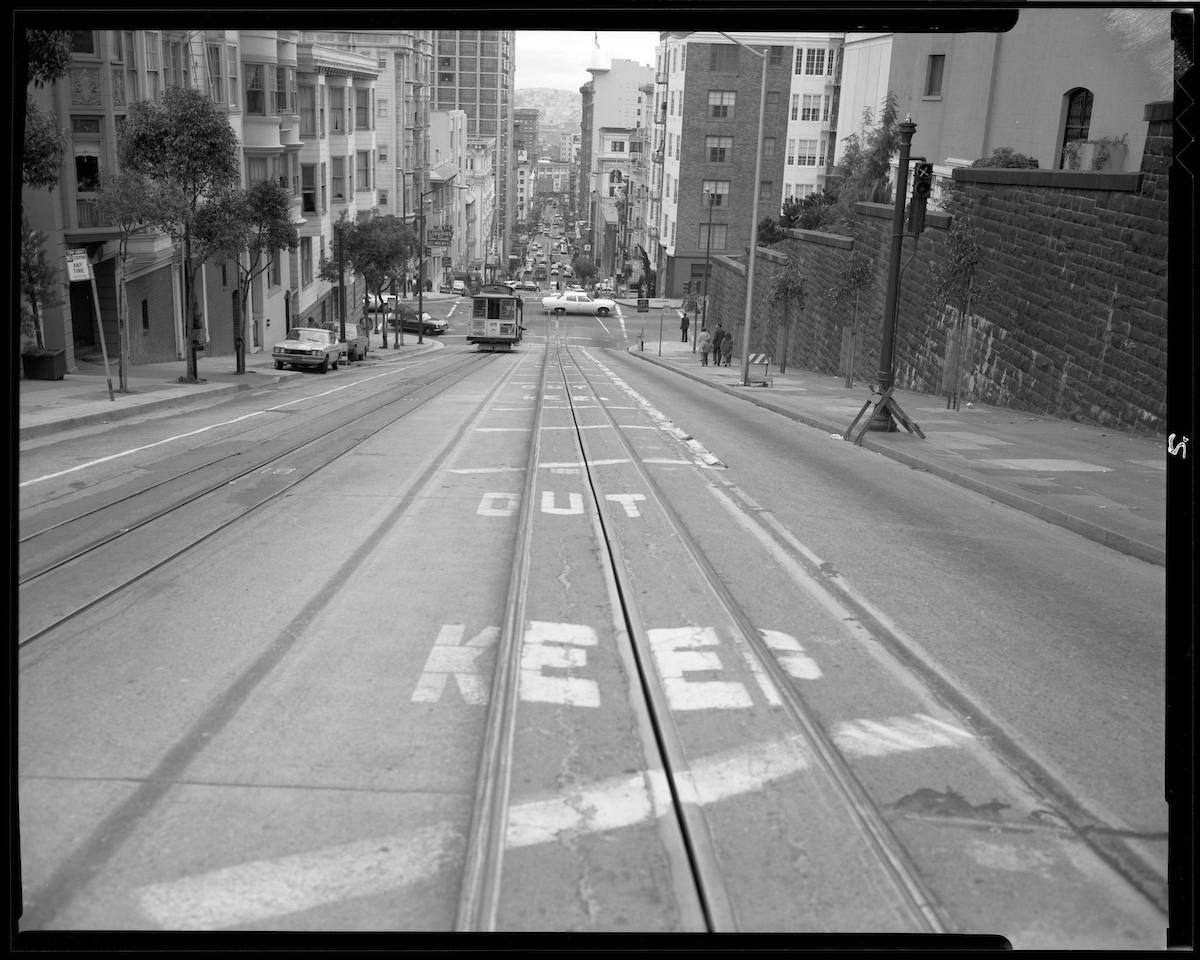
Cable car tracks with the words “keep out” painted over the street.

Transit-only lane along the Powell Street cable car tracks from California to Pine Street | November 27, 1973 

New equipment, transit priority and a focus on complete funding for Muni were initial hallmarks of the policy. The passage of Proposition E, a city charter amendment, in 1999 further enhanced Transit-First by including protections in the landmark legislation for people walking and bicycling. 

“San Francisco’s Board of Supervisors showed remarkable foresight in adopting the Transit-First resolution, and it no doubt helped San Francisco remain one of the strongest public transit cities in the nation,” said Jason Henderson, San Francisco State University Geography and Environment professor and author of Street Fight: The Politics of Mobility in San Francisco.  

In addition to making transit, walking and biking more attractive, Transit-First also promotes equity. When residents have options beyond cars, employment and economic opportunity can grow, as does the opportunity to reduce greenhouse gases. 

Professor Henderson believes San Francisco was the first city in the country to adopt a policy to prioritize public transit, but that doesn’t mean the work is done. “Transit-First must no longer be advisory,” he said. “[New policies are] needed so that public transit, cycling and walking are more than aspirational.”   

In recent years, the “Muni Forward” program has reflected the Transit-First policy with 80 miles of transit priority street improvements. Among those improvements, diamond-marked transit lanes have evolved to become the present-day “Red Carpet” lanes reserved exclusively for buses and taxis to reduce travel times and the impact of traffic congestion on Muni schedules. Meanwhile, Market Street has gone through various redesigns in the downtown area over the years. Following boarding island and lane improvements, San Francisco’s busiest thoroughfare received its first red transit lanes in 2014 and was declared “Car Free” in a monumental celebration on January 29, 2020. 

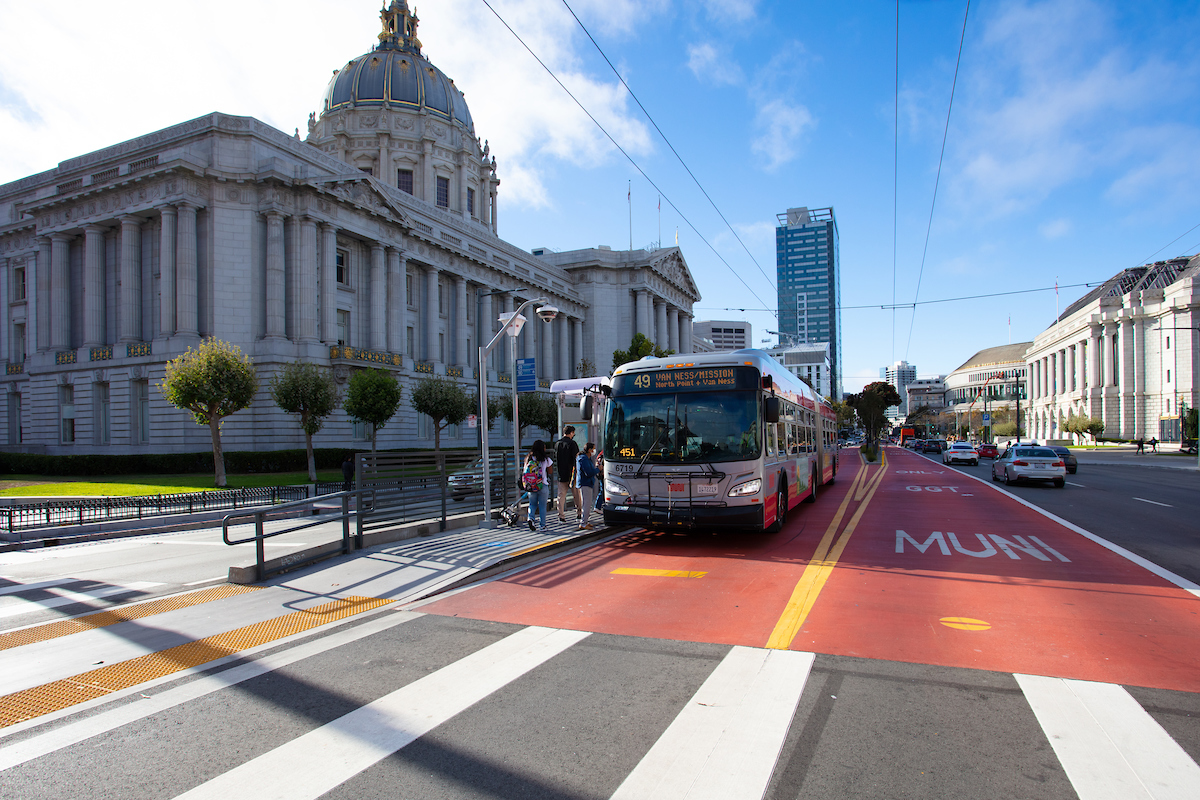
Three people board a Muni bus on Van Ness Avenue in front of City Hall.

Riders board a 49 Van Ness/Mission bus near City Hall 

Today we can see the Transit-First policy in action in the now open Central Subway and projects such as the Van Ness Bus Rapid Transit (BRT) corridor and the Muni Forward L Taraval Improvement Project that is now under construction to add transit lanes, make the route more accessible and improve pedestrian safety and visibility. With Transit-First entering its 51st year, there are new challenges as the COVID-19 pandemic has driven many people back into private cars. However, the SFMTA’s improvement projects continue with a focus on proven strategies that make transit, walking and bicycling the city’s preferred modes of travel. 


Published March 17, 2023 at 11:42PM
https://ift.tt/GymfpEX

Wednesday, March 15, 2023

100 and Counting – More New Trains Join the SFMTA Fleet

100 and Counting – More New Trains Join the SFMTA Fleet
By Christopher Ward

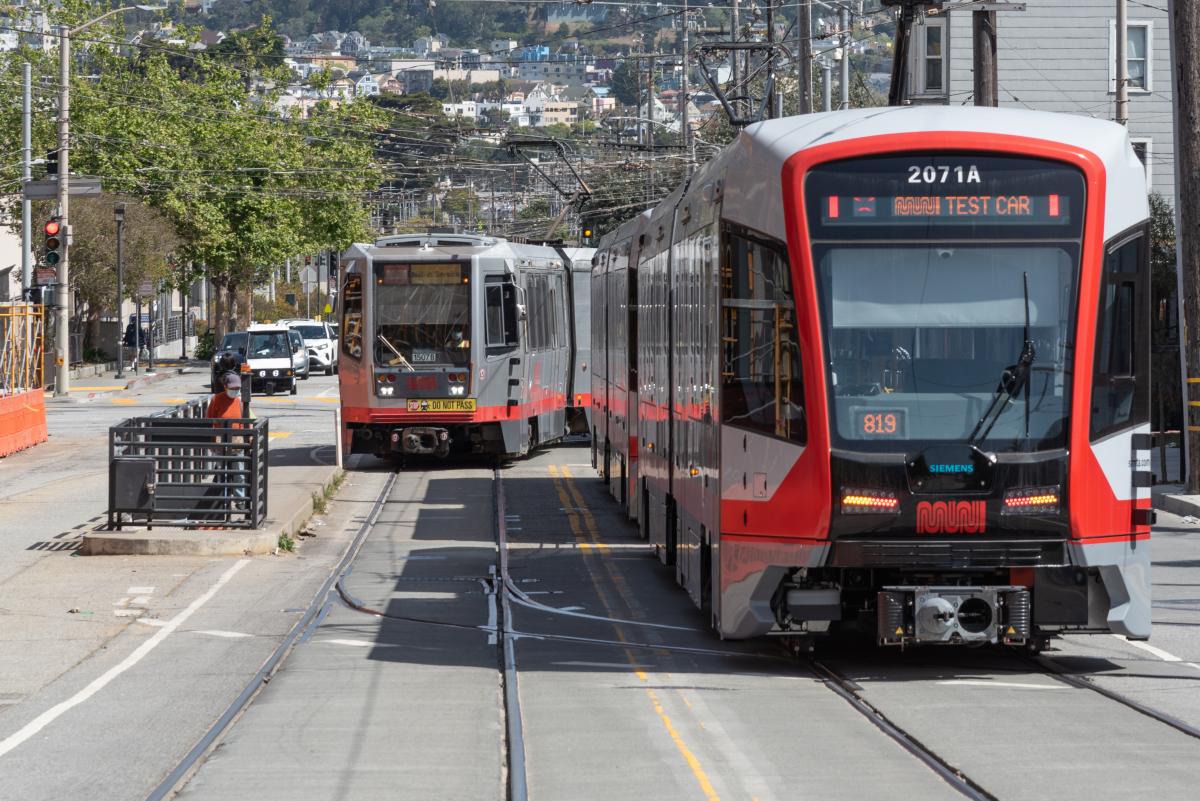
Photo of an older Breda model Muni Metro train on the street in the background, and a new LRV4 model Muni Metro train in the foreground.

Muni continues to expand its fleet with its 100th light rail vehicle four-series (LRV4) on San Francisco streets, broadening the reach of transportation in the city! 

The SFMTA received its 100th new LRV4 (light rail vehicle four-series) in December 2022, closing out a year of big accomplishments for the agency. This train represents a milestone in the continued progress of the LRV Fleet Replacement Program.  

The SFMTA is steadily expanding its fleet with about three new LRV4 train cars arriving every month. We expect 219 total cars to be delivered by 2025. This allows us to retire the aging Breda vehicles, which have been in use by the SFMTA since 1955. Compared to the mostly grey Bredas, the new LRV4 trains are easy to spot on the street, with their distinctive “red ribbon” that wraps around the front of the vehicle and down the sides.  

The new LRV4 trains are also far more reliable than the outdated Bredas. With better design and engineering, these trains have fewer breakdowns and require less maintenance. This makes them more reliable and less expensive to operate, which means better service for Muni riders. 

The new LRV4s have improved safety and service features. In response to customer feedback, the seats are color-coded – blue indicates priority seating for seniors and people with disabilities, and red indicates general seating. We also added more visible, yellow grab rails. The LRV4s also have digital displays that show information about upcoming stops and nearby alternate routes at transfer points. These same interior upgrades will be added to earlier LRV4 trains over the next year.  

Learn more about the history of LRVs, look into Muni Light Rail Through the Years and follow us on Instagram (Instagram.com/sfmta_muni). 


Published March 16, 2023 at 05:00AM
https://ift.tt/vVqNfGB

Monday, March 13, 2023

Tech Talk: Muni Predictions 101

Tech Talk: Muni Predictions 101
By Christopher Ward
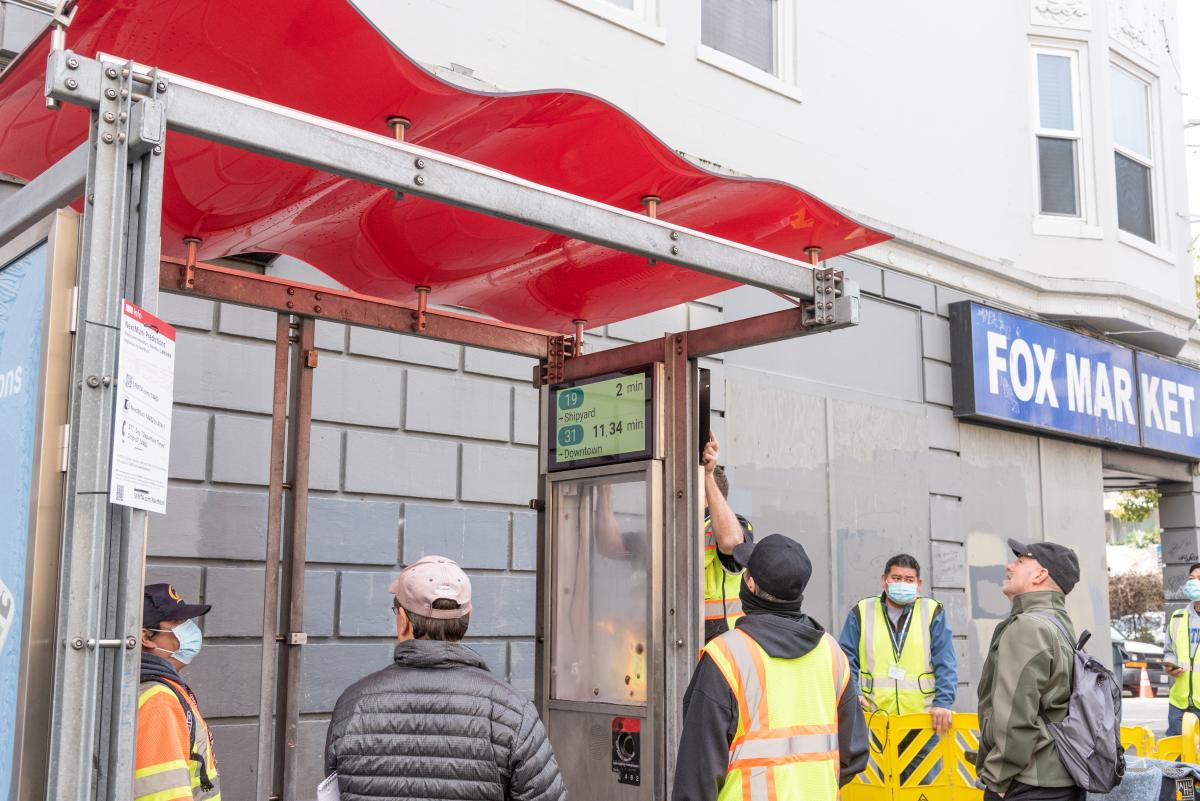
A picture containing contractors speaking with a Muni Rider as customer information displays are being installed in a transit shelter. New Customer Information Systems are being installed and causing customer curiosity! 

Got a burning question about the SFMTA’s Muni predictions that are made by our Next Generation Customer Information System (CIS)? We’ve got answers! Below are some of the frequently asked questions from Muni customers. Send us yours! 

Where do Muni predictions come from?  

Muni predictions come from data provided by multiple SFMTA systems including equipment on our vehicles. Real-time predictions are based on the real-time locations of Muni vehicles. A computer algorithm compares the real-time data to past travel times based on time of day, day of week, season and other factors that affect travel to predict future arrival times. Travel patterns in this historic data are applied to real-time data to generate accurate Muni predictions. 

When the system has no real-time information, it uses Muni schedules to make predictions. This often occurs at or near terminals and during service changes. However, schedule data isn’t as reliable as real-time data, particularly because the SFMTA has made Muni service more reliable by shifting away from using schedules to headway management, scheduling service at regularly spaced intervals to reduce gaps and bunching, rather than clock times. 

What factors impact predictions? 

The two main problems with predictions are 1) vehicles in service but not showing up in the Customer Information System (we call those “surprise vehicles”) and 2) predictions made from the schedule, but the vehicle doesn't show up (we call those “ghost vehicles”).  

A “surprise vehicle” is when a bus or train is running but it is not picked up by the real-time position data feed. This may be because of damaged equipment, a vehicle not signed into the system when it departs the division, or when changes are not entered into the system. When a vehicle is missing from the system, the wait times at stops appear longer than they actually will be. This happens because the prediction system does not “see” one of the vehicles. 

A “ghost vehicle” usually occurs at stops close to the start of the line. You might see this at the stop when looking at the prediction countdown. When the count gets to zero, no vehicle appears! This happens because the prediction system is not picking up any vehicles while they are at the terminal and before they start the route. This results in the countdown relying on the schedule, even if the vehicle is delayed. If a vehicle is scheduled but not coming, then the countdown will end and there will be no vehicle. The system relies on the vehicle data when it is available, otherwise it will show the schedule information that may not be accurate.  

The same problem occurs with trains as with buses but at an increased rate, because trains cannot pass each other like buses. Because of this, there are often service adjustments made at the control center to manage gaps that result in inaccurate predictions. 

Why do different apps have different predictions sometimes? 

The SFMTA generates vehicle information and shares this data openly for anyone to use cost-free. Third party apps like Transit, Google and Waze, as well as “mom and pop” apps, each have their own way of taking in and making use of the data that we provide. 

These third parties are independent of the SFMTA and we do not keep track of the quality of their predictions. If customers experience problems, we recommend reporting the problem directly to the third-party and checking the predictions at SFMTA.com/Routes. 

What does it mean when a Muni display says, “no predictions available?”  

The “no predictions” message displays when there is no real-time vehicle data to generate predictions, either because the system is down or a vehicle is not logged into the system. This does not mean that isn’t service. Buses and trains are still running. If there is a service issue affecting bus or train operation, the SFMTA will display relevant information, make audio announcements, send out email and SMS alerts and post on Twitter.    

What new features will be added and how can I learn more?  

The Next Generation CIS screens now display real-time vehicle locations on a map and real-time on-board vehicle capacity information, along with arrival prediction times. 

Some of the next features we plan to roll out are real-time alerts such as reroutes and elevator availability. We’re also improving terminal predictions, and we are working on multiple MuniMobile app upgrades.  

For more information visit our CIS project and System Updates websites! 


Published March 13, 2023 at 10:27PM
https://ift.tt/CN4lxjb
Wednesday, March 8, 2023

Muni Safe Driver Awards 2023

Muni Safe Driver Awards 2023
By Sophia Scherr

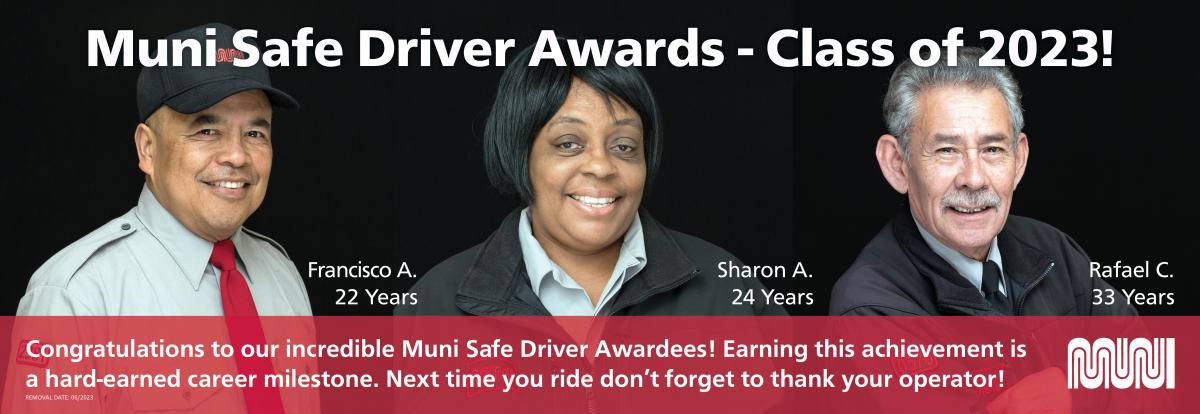
Title: "Muni Safe Driver Awards - Class of 2023! Highlighting Safe Drivers Francisco A. (22 years), Sharon A. (24 years) and Rafael C. (33 years). Text below: "Congratulations to our incredible Muni Safe Driver Awardees! Earning this achievement is a hard-earned career milestone. Next time you ride don't forget to thank your operator!" Muni logo

Keep an eye out for one of our Safe Driver Award PSA’s on your next Muni ride & don’t forget to thank your operator! 

Driving through San Francisco’s winding and hilly terrain in any vehicle is tricky. Doing so in a 40-foot bus, cable car or streetcar is not as easy as our operators make it seem. Despite these challenges, every day our Muni operators connect San Franciscans to where they need to go safely.  

This Saturday marks the 50th Safe Driver Awards, where we celebrate our transit operators who have put safety first in their efforts to deliver you to your home, work and communities. This year 249 operators earned the distinction of being a Muni Safe Driver. Receiving a Safe Driver award is a hard-earned career milestone — to achieve it, operators must have driven at least 1,952 hours during the past fiscal year (July – June) without a preventable incident or collision. Quite a few operators have maintained their Safe Driver status for several decades. Now that’s a dedication we applaud! 

This Saturday, we’ll recognize the following operators for 35+ years of continued safe driving:  

  • Oliverio V. – 48 years (Cable Car) 

  • Lonnie M. – 45 years (Green Division) 

  • Jason L. – 38 years (Green Division) 

  • Eddie C. – 35 years (Cable Car) 

  • Andrew M. – 35 years (Cable Car) 

“I can’t thank our operators enough. They show up to work every day with a commitment to keeping our riders safe. Those recognized at the Safe Drivers Awards ceremony display extraordinarily safe driving track records,” said Jeffrey Tumlin, Director of Transportation. “All our operators have worked throughout the pandemic and in very difficult driving conditions or challenging environments with safety as their top priority. They are the heroes that positively represent our agency daily and deserve the utmost praise for their service!”  

The SFMTA and our city rely on our Muni operators to keep the city moving by providing daily service to hundreds of thousands of riders throughout the Muni network. We not only honor these incredible 249 operators, but all the employees who work hard to make safety the standard by which we operate. Next time you ride, don't forget to thank your operator!  


Published March 08, 2023 at 11:49PM
https://ift.tt/Ivbi5sV

Tuesday, February 28, 2023

Black History Lost and Found: Dorothy Jaymes and Accessible Transit

Black History Lost and Found: Dorothy Jaymes and Accessible Transit
By Jeremy Menzies

We continue to celebrate Black History Month by sharing the stories of SFMTA staff whose revolutionary work helped pave the way for future generations of Muni riders. Today, we look at the incredible contributions of Dorothy Jaymes, who played a critical role in helping advance accessibility on transit in San Francisco at a time when little was being done.  

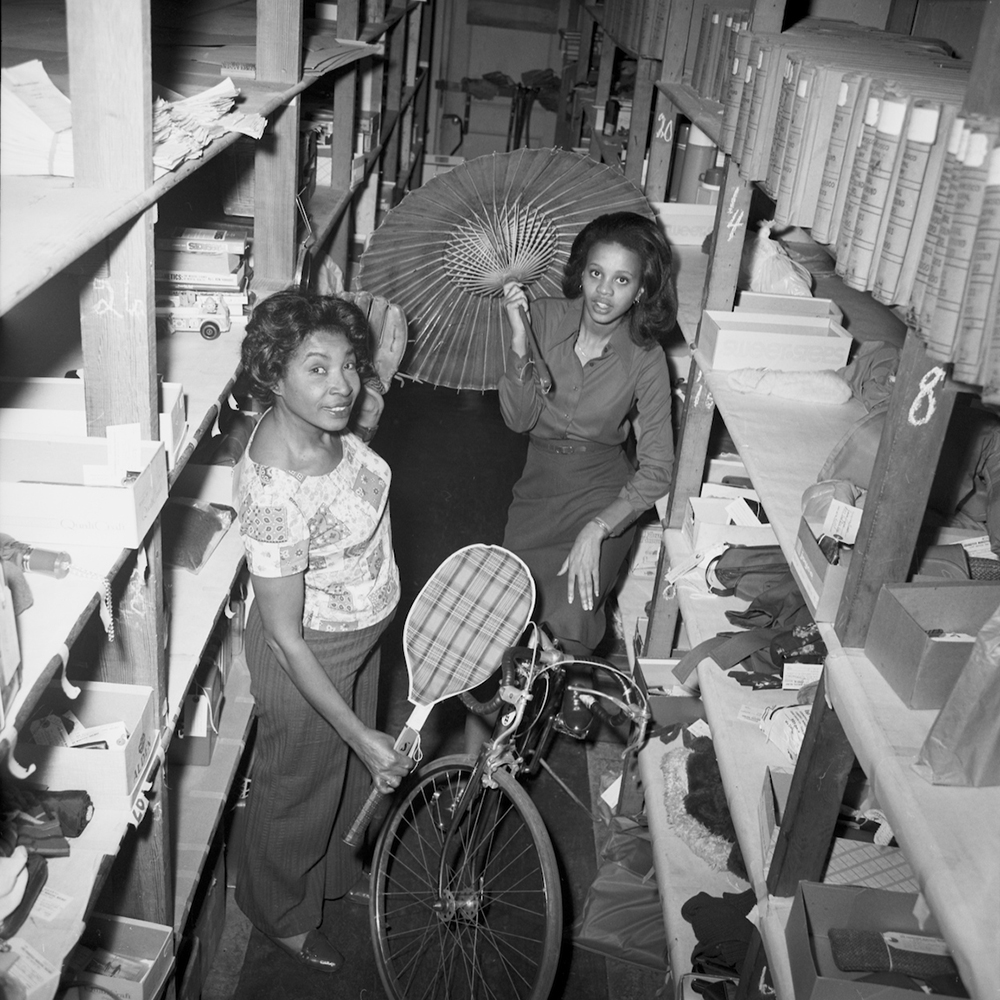
Employees standing in between shelving holding various items such as a umbrella, tennis racket and bicycles. The shelving is filled with additional various items.

Jaymes (left, holding tennis racket) with her assistant, Linda Westry in the Muni Lost & Found Department in 1977. 

Born in Lake Charles, Louisiana, Jaymes started her career in Muni’s Lost & Found Department in the 1970s. According to a 1977  article in the department newsletter, Trolley Topics, she took her job seriously, accounting for every lost item no matter how small or large. 

Around the same time, protests by local disability rights advocates exposed the issues of poor access to public transit to local officials. The city responded in part by seeking contracts for new buses with passenger lifts in 1978 and by establishing the Elderly & Handicapped Program, to which Jaymes was a foundational contributor. 

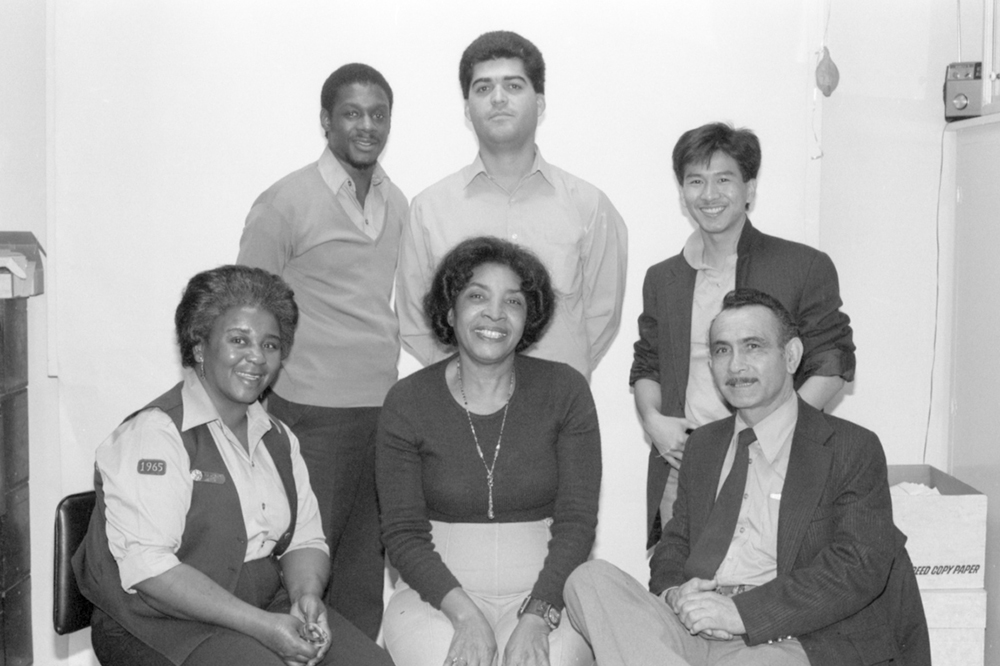
Group photo of employees. The back row of three staff is standing. The front row of three staff is seated. One emplyee is wearing a Muni work vest.

Members of Muni Elderly & Handicapped Office staff in 1985, with Jaymes at center. 

By October 1979, Jaymes headed up the E&H Office and was responsible for processing applications for discounted transit fare cards. An early version of the Free Muni for People with Disabilities Program, this program lowered the cost of transit for people who needed it most. 

Jaymes’ role in the office played a critical part in improving access to transit for all San Franciscans. 

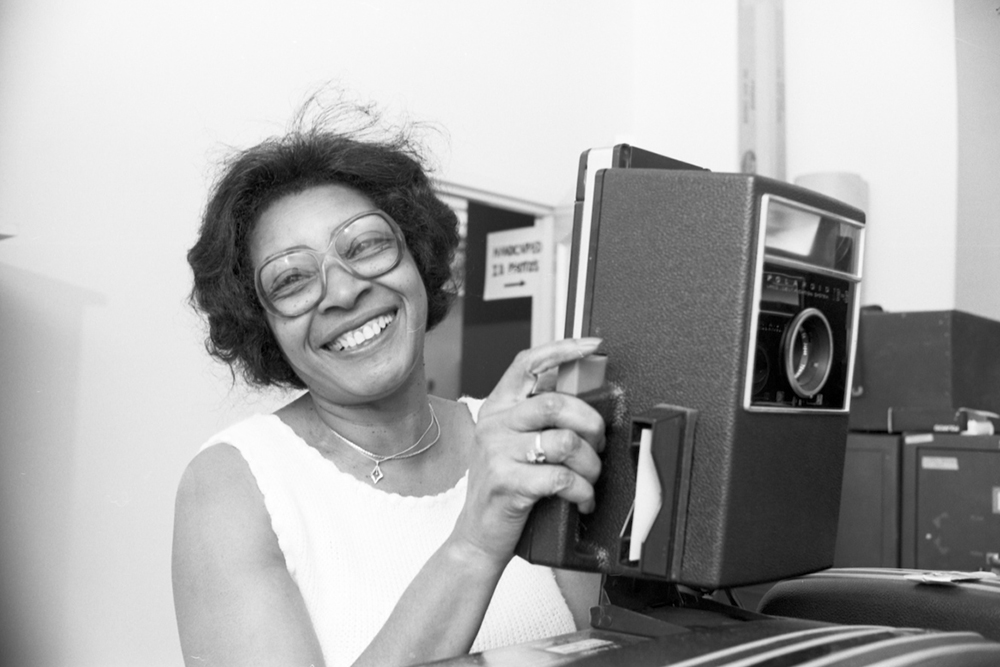
Employee smiling and holding a vintage card camera

Working out of a room in the Muni Photo Department, Jaymes wields an ID card camera in this 1979 photo. 

She left Muni in 1990 and finished out her career with the City of San Francisco at the Planning Department, before retiring in the early 2000s. Jaymes returned to Louisiana in retirement and passed away in 2015 at age 89. One of her former San Francisco co-workers remembered her as “a wonderful woman who was strong and always stood up for the workers.” 

So often, we only hear the stories of major figures and their brave breakthroughs in history. Capturing the full story begins with also celebrating and recognizing the contributions of our “unsung heroes,” whose daily work is still helping Muni riders today.  


Published February 28, 2023 at 11:01PM
https://ift.tt/42Ra9mM

Friday, February 24, 2023

N Judah Motorization Allows City Partners to Complete Critical Maintenance Work

N Judah Motorization Allows City Partners to Complete Critical Maintenance Work
By Jessie Liang

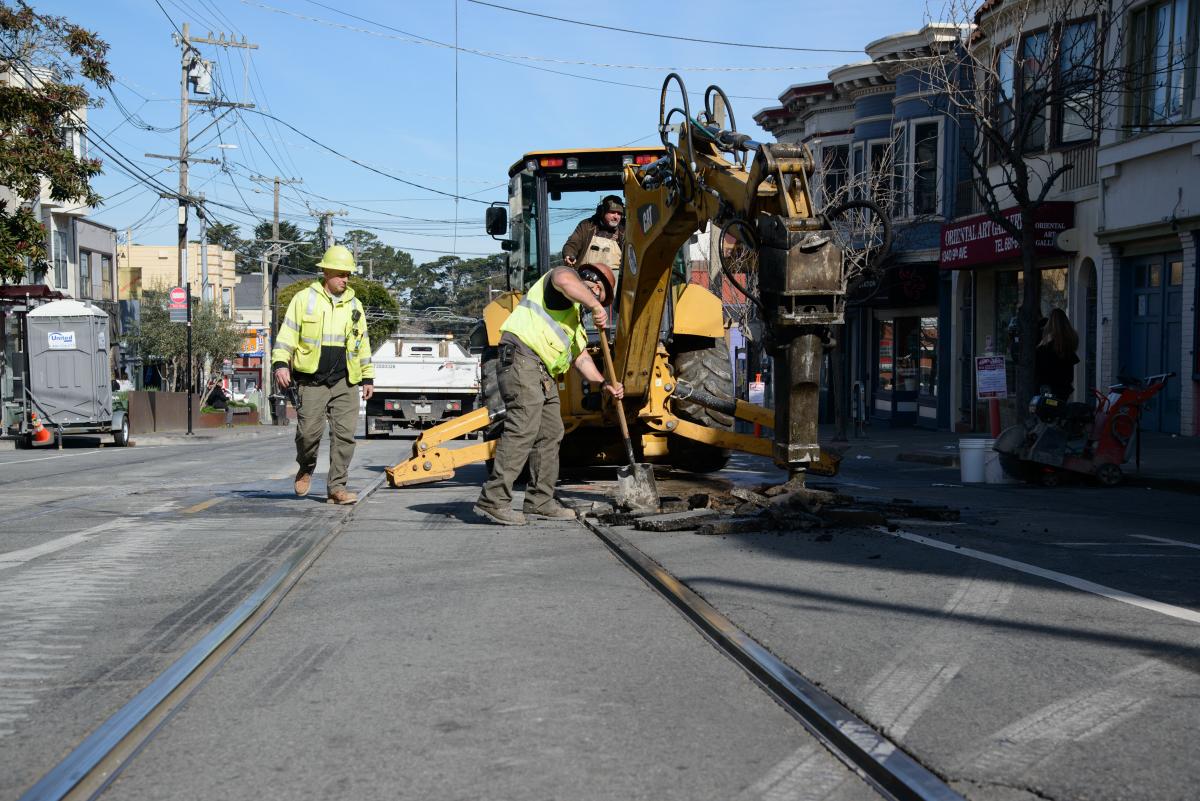
Crew member by the rail track and an excavator with a shovel along the street with houses lined along the side.

MOW Crew Repairing Damaged Pavement Around Tracks on 9th Avenue

Kudos to the SFMTA’s Maintenance of Way (MOW) teams for successfully completing critical work during the N Judah motorization on Feb. 18 and 19. The purpose of the motorization was to provide access for work to be done in Muni’s right of way by Public Works, PG&E and the SFMTA, including utility pole replacements at Cole and Carl, sewer investigation, repairs at 18th Avenue and Judah and 41st Avenue and Judah. The SFMTA was also making improvements to the J Church surface route between Duboce Park and the Balboa Park Station to increase service reliability, enhance street safety and reduce travel times. 

To maximize the benefits of the motorization, the MOW teams took advantage of the opportunity to complete project milestones and critical maintenance work  for traction power and overhead lines, mechanical systems, light rail track and signals. 

To ensure that our riders had the transit service they needed along this corridor, bus shuttles served as a substitute for N Judah rail service between Ocean Beach and Church and Duboce. Train service continued between Church and Duboce and Caltrain. The SFMTA’s communications team also helped to notify customers of the alternative service plan during the rail shutdown through printed, digital and audio messaging and wayfinding ambassadors.  

Muni maintenance initiatives such as these aim to make subway operations more reliable for customers and prevent future breakdowns. The coordination by our teams across divisions is building on the successful Fix It! Weeks we had last year, which have helped reduce major delays in the Muni Metro by more than 80 percent. We look forward to more to come at our first Fix It! Week scheduled for March 16 to 22.  

For updates, please visit SFMTA.com/NShuttle. For real time service advisories, please follow us on our Twitter at @SFMTA_Muni.  


Published February 25, 2023 at 06:55AM
https://ift.tt/au7YmgW

Wednesday, February 15, 2023

Scooter Permittees Receive Feedback from Students with Disabilities

Scooter Permittees Receive Feedback from Students with Disabilities
By Maddy Ruvolo

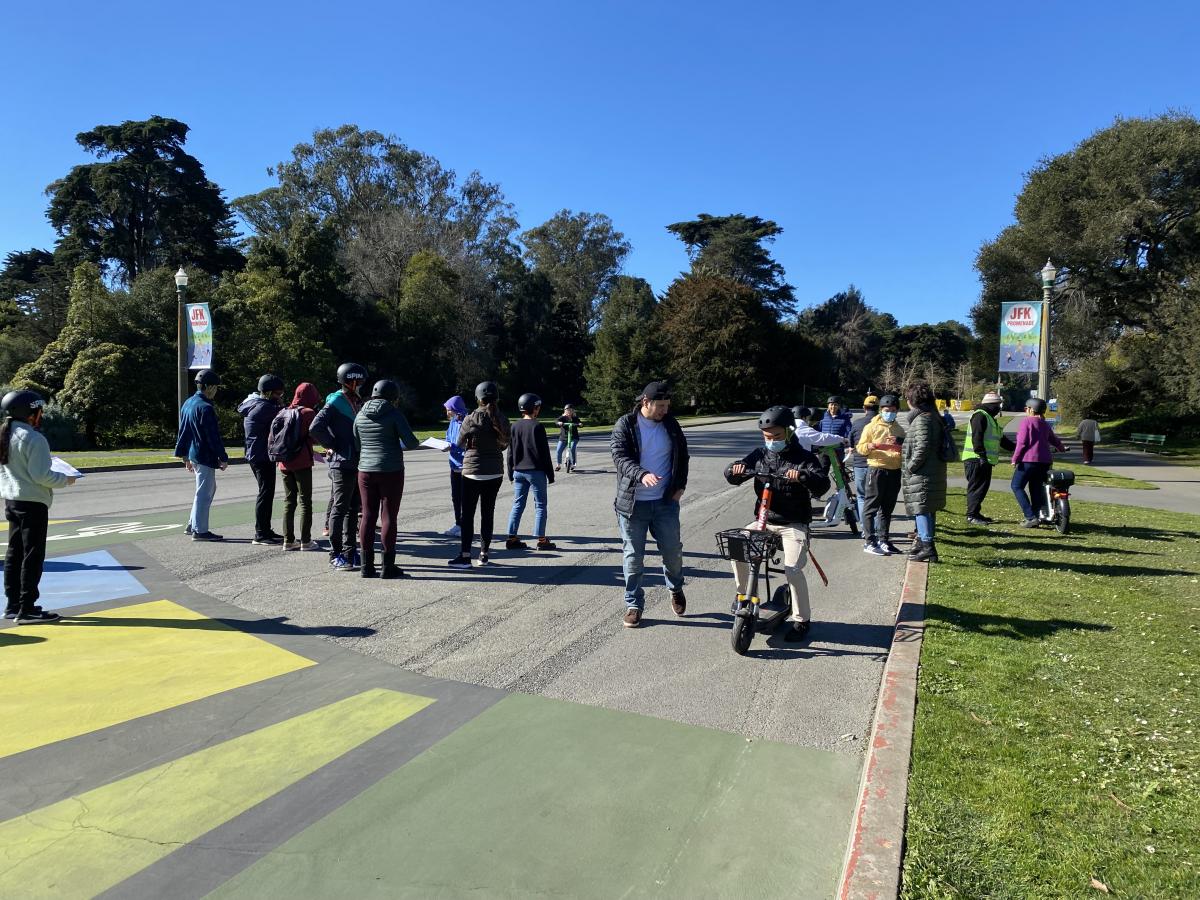
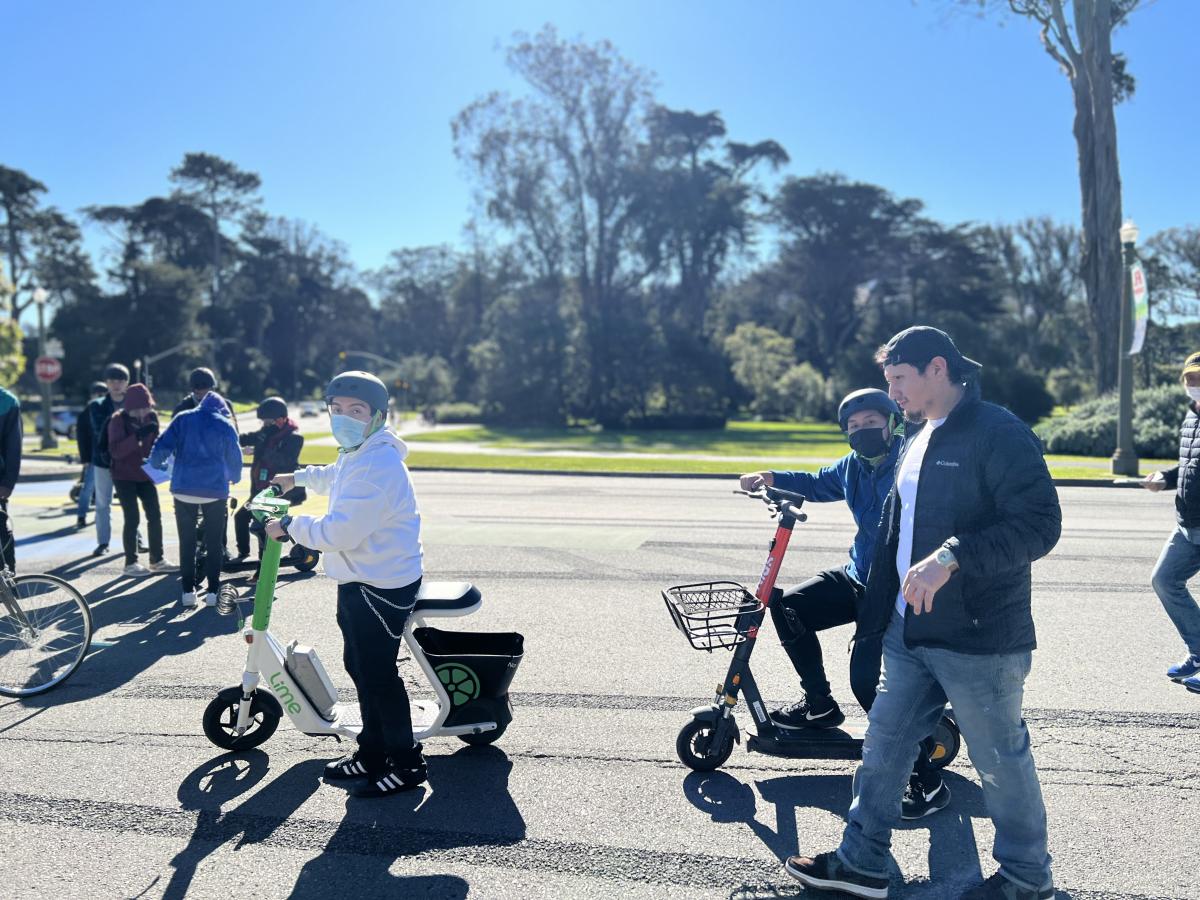
On a recent Monday in Golden Gate Park, 28 students and staff from AccessSFUSD gathered on JFK Drive to test-ride adaptive scooters. The group took turns riding adaptive devices from two scooter companies permitted to operate in the city, Lime and Spin. Adaptive devices are designed to meet the needs of riders with a variety of disabilities and provide additional stability features, such as a seat, a wider base, and an additional wheel. After trying the scooters, the students shared their feedback about a variety of design elements, including the wheels, seat, throttle, basket location, foot plate width, and the ease of getting started. 

A group of AccessSFUSD students and staff rides adaptive scooters on JFK Drive in Golden Gate Park Adaptive scooter demo in Golden Gate Park
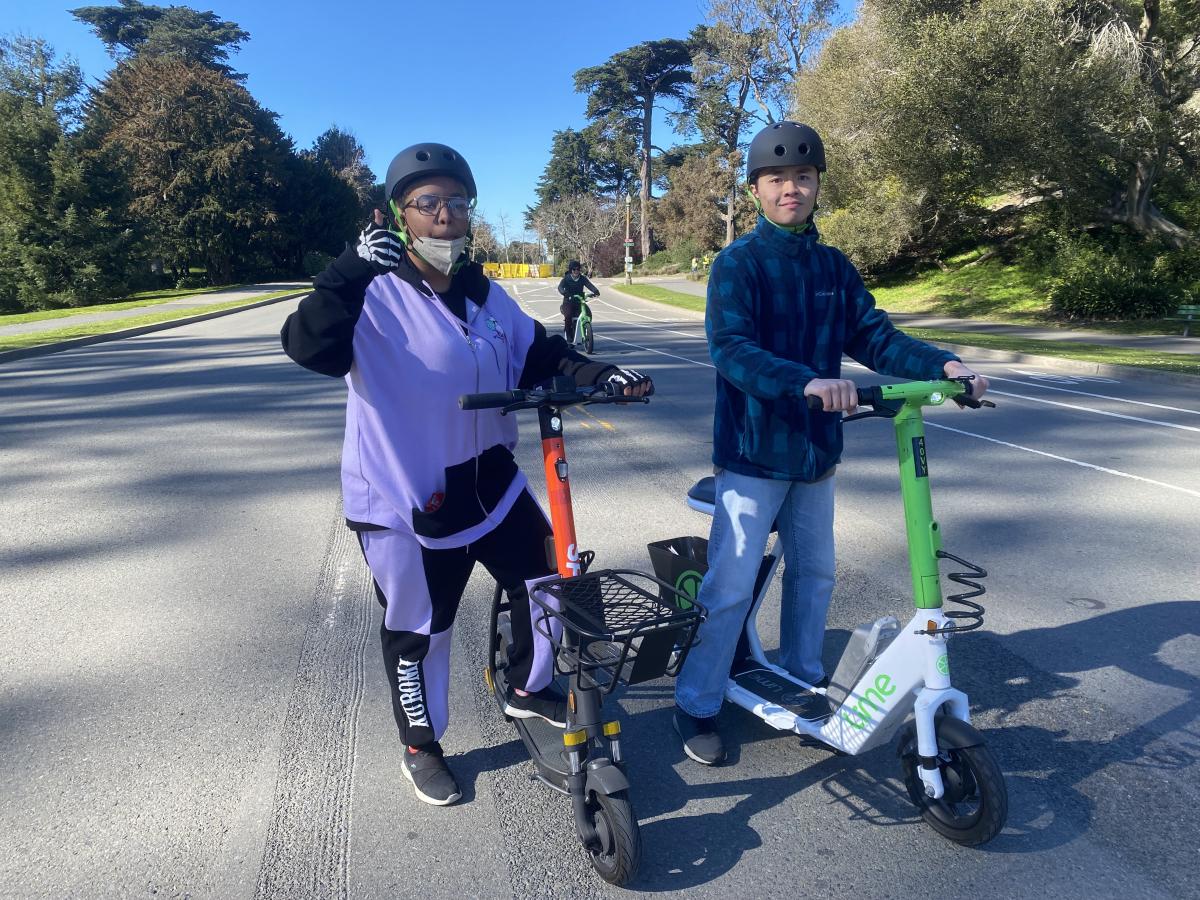
Students embraced the opportunity to ride scooters and provide feedback. AccessSFUSD is a community-based program for students 18-22 with disabilities. Located across 11 sites in San Francisco, the program focuses on teaching functional life skills within the community setting. Developing advocacy skills is a key component of the program, and students enthusiastically shared their input with the scooter companies. Heidi Seretan, Special Education Department Head at AccessSFUSD: The Arc said, “It was a glorious day to ride and advocate on car-free JFK in Golden Gate Park, San Francisco’s own backyard.”  

One student shared they had an “amazing first time” riding a scooter and described it as “the best.” Students also gave thoughtful constructive criticism, explaining when a particular seat height or device design didn’t work for them. And one student said that they “need more practice... but I'm getting the hang of it.”   

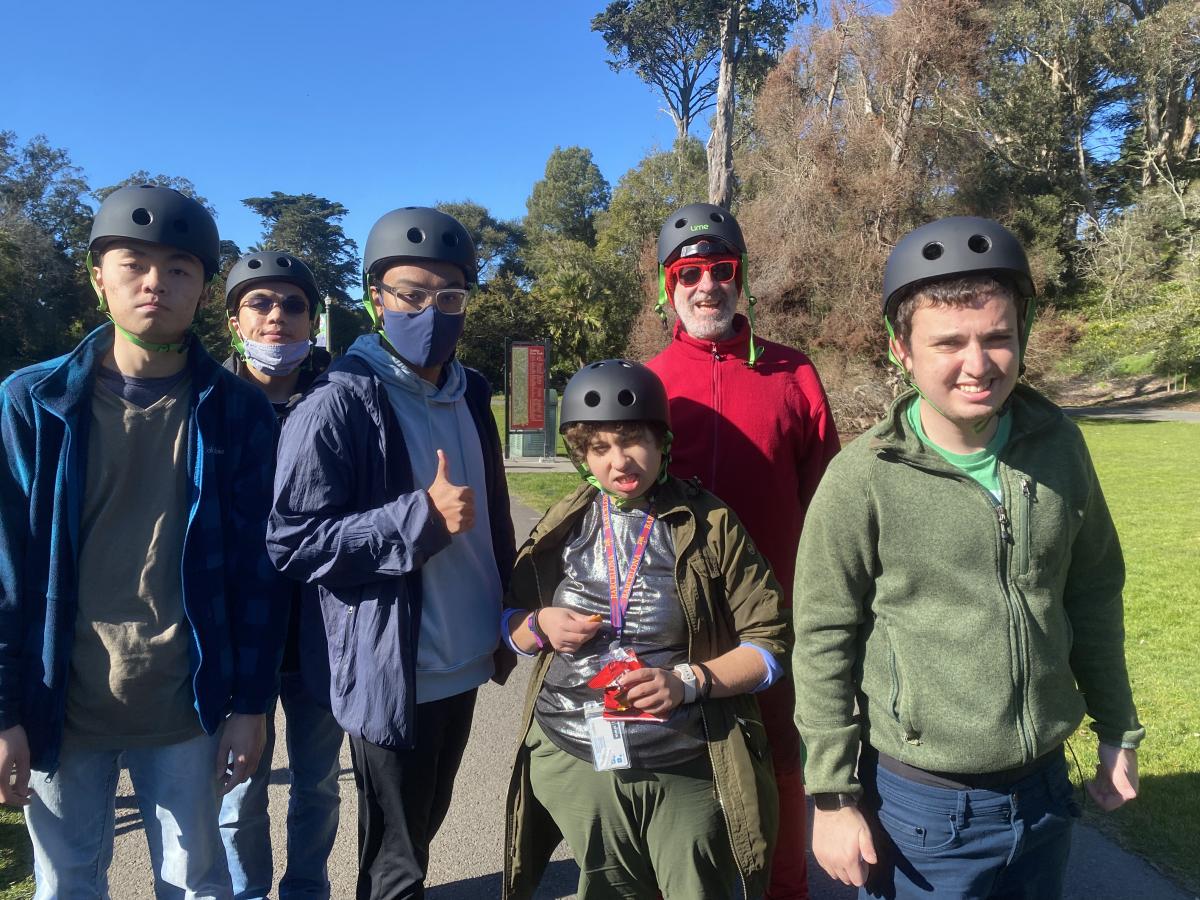
AccessSFUSD students standing with Lime and Spin scooters; one student is giving a thumbs upThumbs up to adaptive devices

Staff from Spin and Lime were on-hand to help students get rolling and to answer any questions. Both scooter permittees expressed their appreciation for the comments from AccessSFUSD students. Lime shared that they “enjoyed hearing directly” from the students and that their “hardware team has already begun reviewing students’ feedback to find ways to continue to refine our vehicles.” Spin echoed the importance of the students’ input, noting that “the direct feedback we gather from local San Francisco students and residents on our adaptive program is critical to continuously improving and more equitably serving the entire community.” 

AccessSFUSD students on Lime and Spin scooters in Golden Gate ParkAccessSFUSD students enjoying scooters 

This is the second time the SFMTA has partnered with AccessSFUSD and scooter permittees to host an adaptive scooter demonstration, with the first event held in fall 2021. Any organization interested in partnering on a similar adaptive scooter event should get in touch with Maddy Ruvolo with our Accessible Services team by emailing Maddy.Ruvolo@sfmta.com.  

A group of AccessSFUSD students wearing helmetsStudents ready to ride

The SFMTA has prioritized adaptive scooters as part of our Powered Scooter Share Permit Program. The three scooter permittees — Bird, Spin and Lime — are required to provide adaptive scooters as a minimum of 5% of their on-street fleet. The permittees also offer different types of adaptive devices through their Complementary Adaptive Programs, which provide longer-term adaptive rentals free of charge through scheduled drop-off and pick-up. We encourage all who are interested to try an adaptive scooter, and stay tuned for more scooter demonstration events coming later this year! 


Published February 15, 2023 at 10:54PM
https://ift.tt/LEo7B2M

Tuesday, February 14, 2023

New Express Service Comes to the 1 California

New Express Service Comes to the 1 California
By Melissa Culross

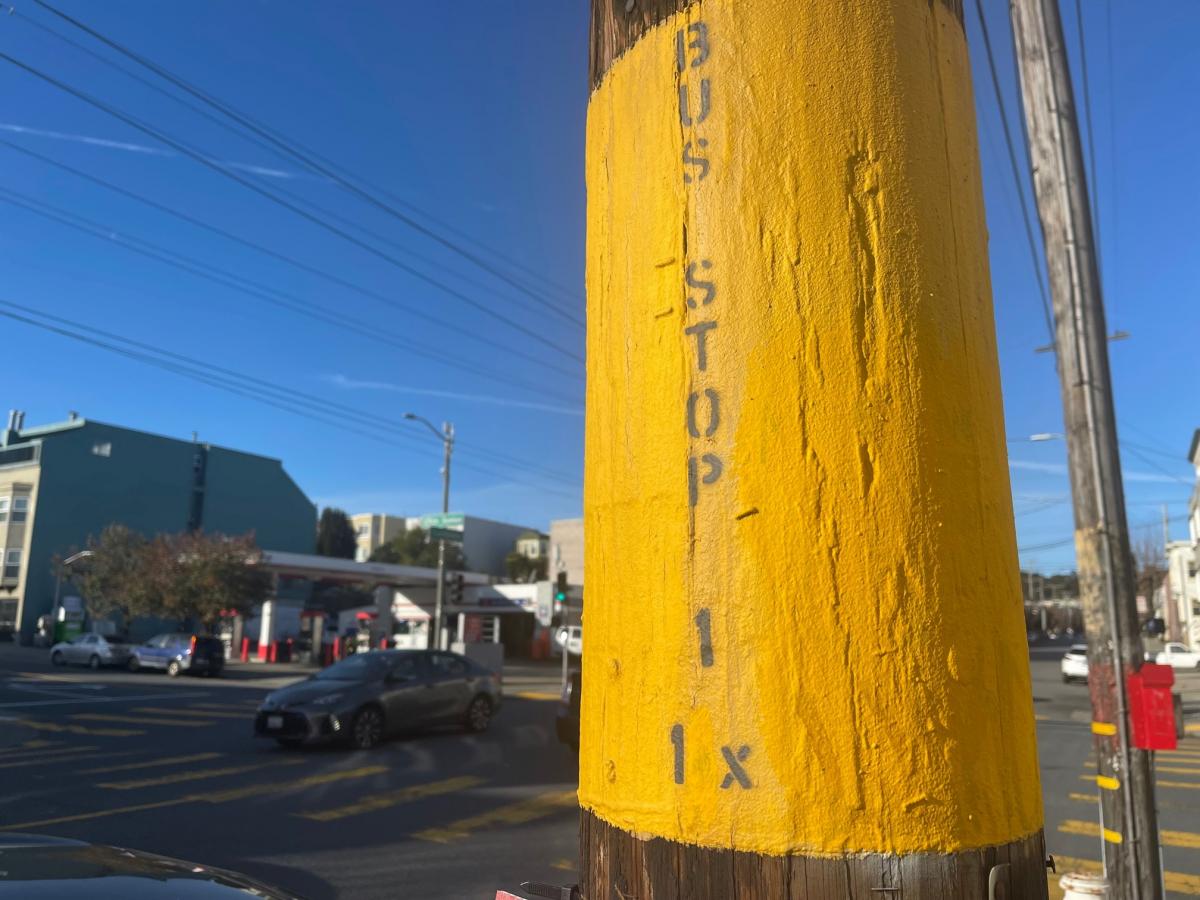
Photo showing a pole on the street painted yellow that says bus stop, 1, 1X

Newly painted Muni flag stop indicating the pilot 1X California Express

Beginning February 21, 2023, a pilot program will offer express bus service on the new 1X California Express between the Richmond neighborhood and the Financial District. The SFMTA plays a significant role in San Francisco’s economic recovery, and this pilot that serves downtown is part of that. 

We have been working on improving travel time and reliability over the last several years. Travel times are now 11% quicker on the 1 California thanks to new transit lanes on California, Clay and Sacramento streets. But our work is not done on the corridor! The new 1X California express will provide another option for riders to zoom from the inner Richmond into and out of downtown even faster. We also expect this service to ease crowding on the 1 California as more people head back to the office. 

Three morning 1X California Express buses will depart from 33rd Avenue and Geary Boulevard at 8:00 a.m., 8:30 a.m. and 9:00 a.m. They will make stops along 33rd Avenue, 32nd Avenue and California Street until Arguello Street, then express straight to Downtown.  

Three afternoon 1X California Express buses back to the Richmond will depart from Sacramento and Davis streets at 4:30 p.m., 5:00 p.m. and 5:30 p.m. They will make three downtown stops and then express straight to Arguello and California. The first two outbound stops of the 1X California Express have been aligned with 1 California local stops to improve convenience for Muni customers. The last downtown stop is at David and Pine streets.  

You can find more detailed service information on the 1X route page (SFMTA.com/1X). 

The SFMTA is monitoring this pilot and will evaluate whether to make it permanent based on the needs of our riders. Let us know what you think at the Muni Feedback page. 

We are excited about this opportunity to support the recovery of downtown San Francisco by offering people this swift way to get there. 


Published February 14, 2023 at 11:31PM
https://ift.tt/iKwpL5r